What Can Go Wrong
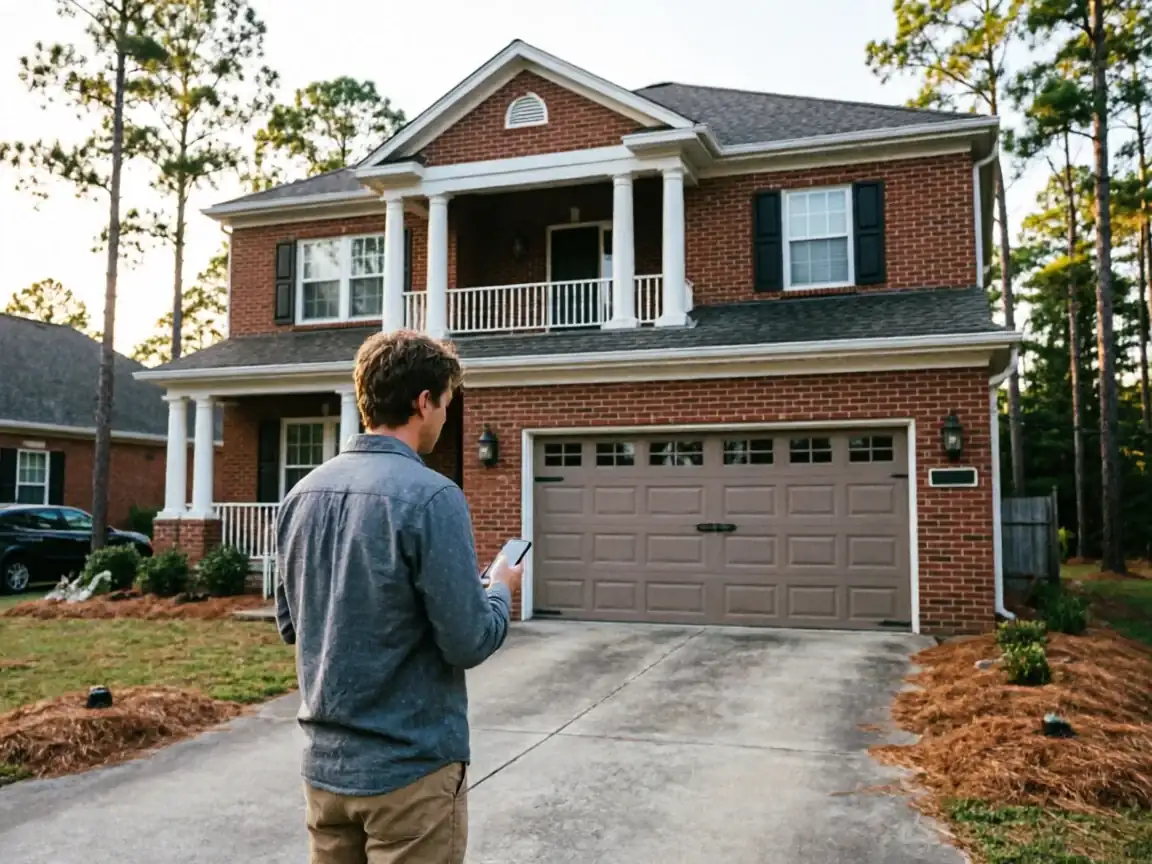
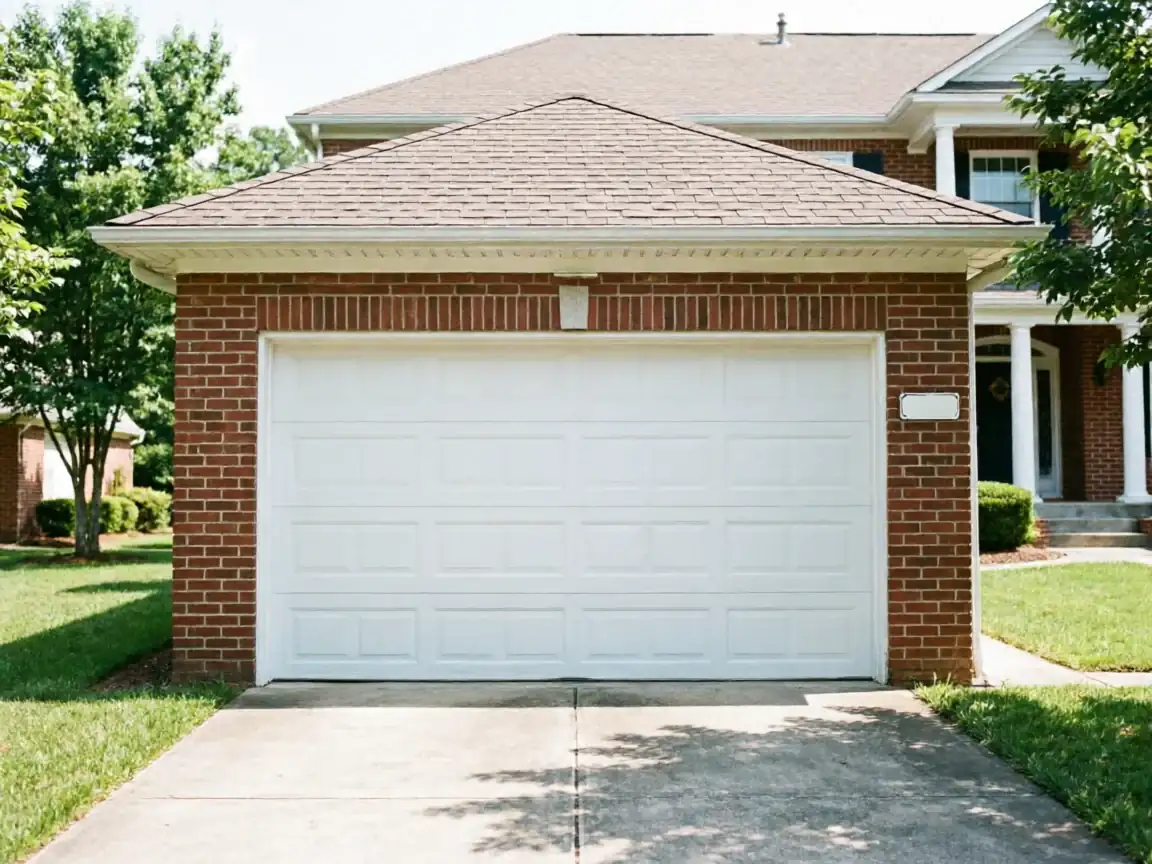
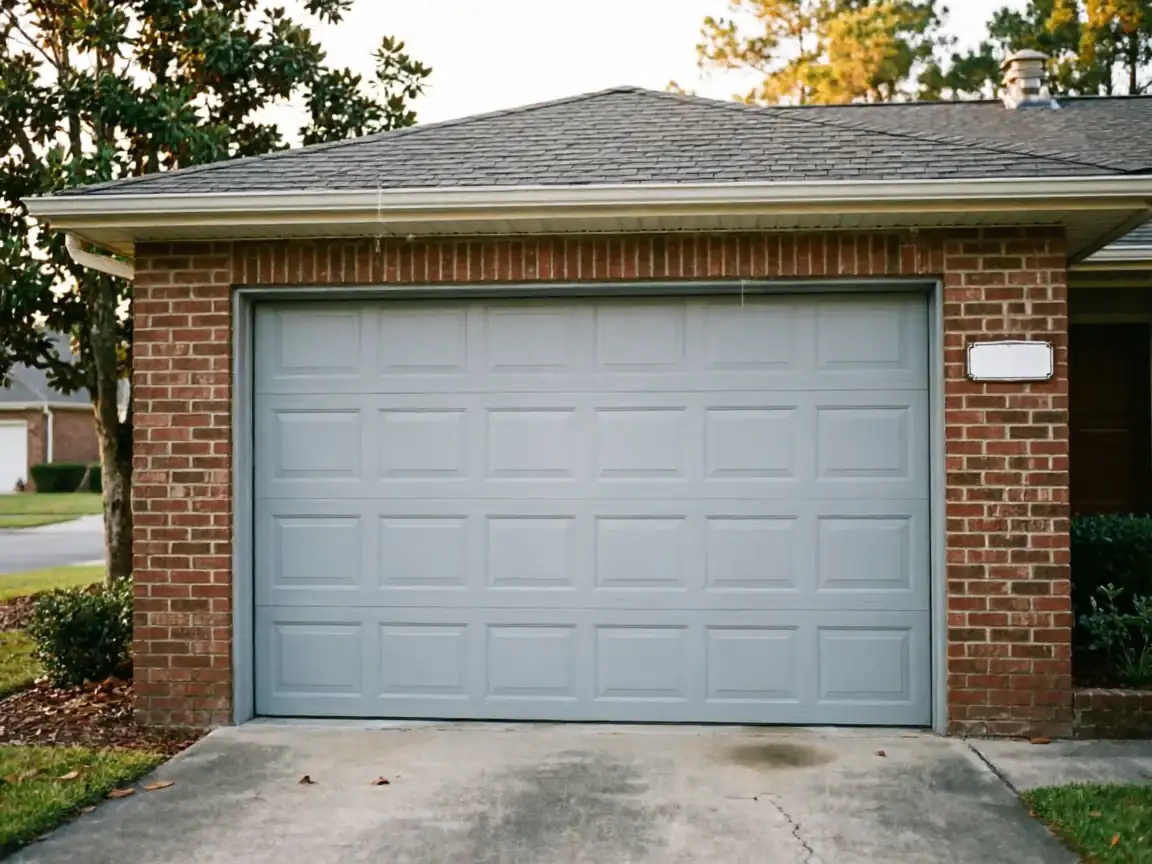
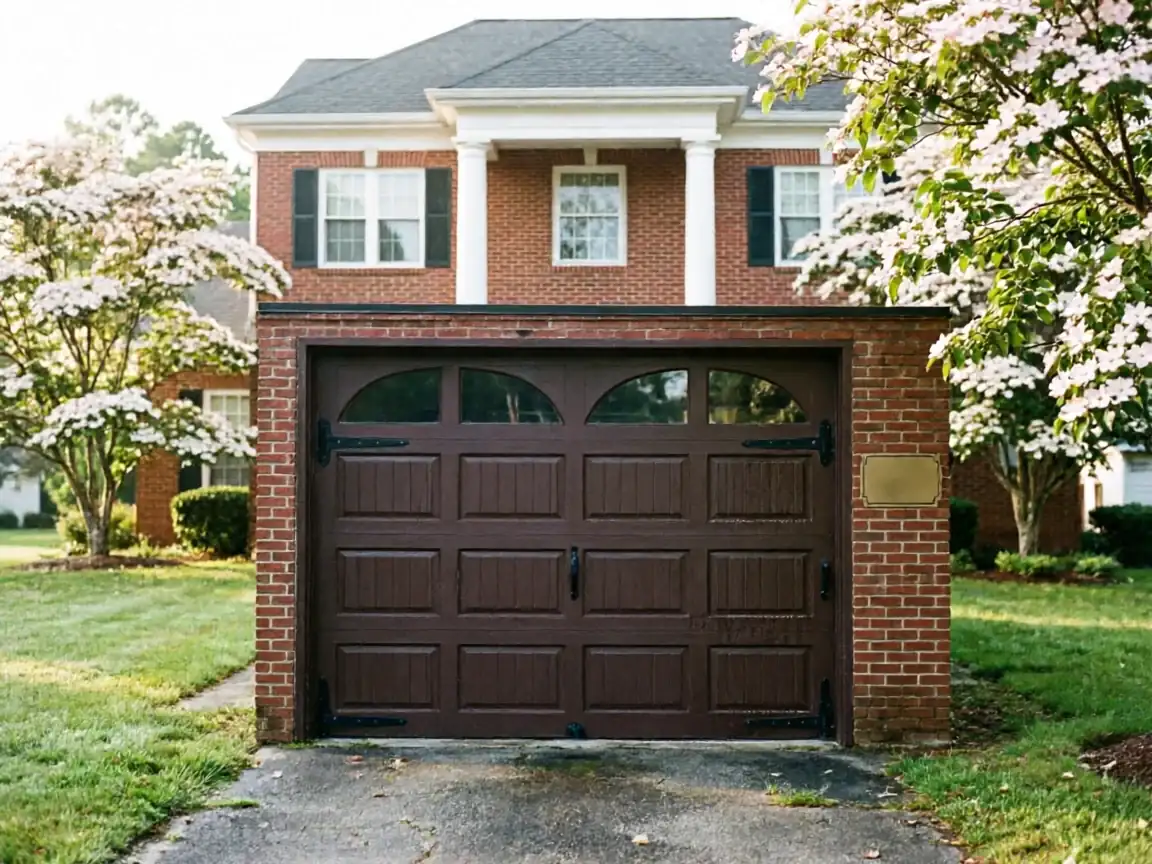
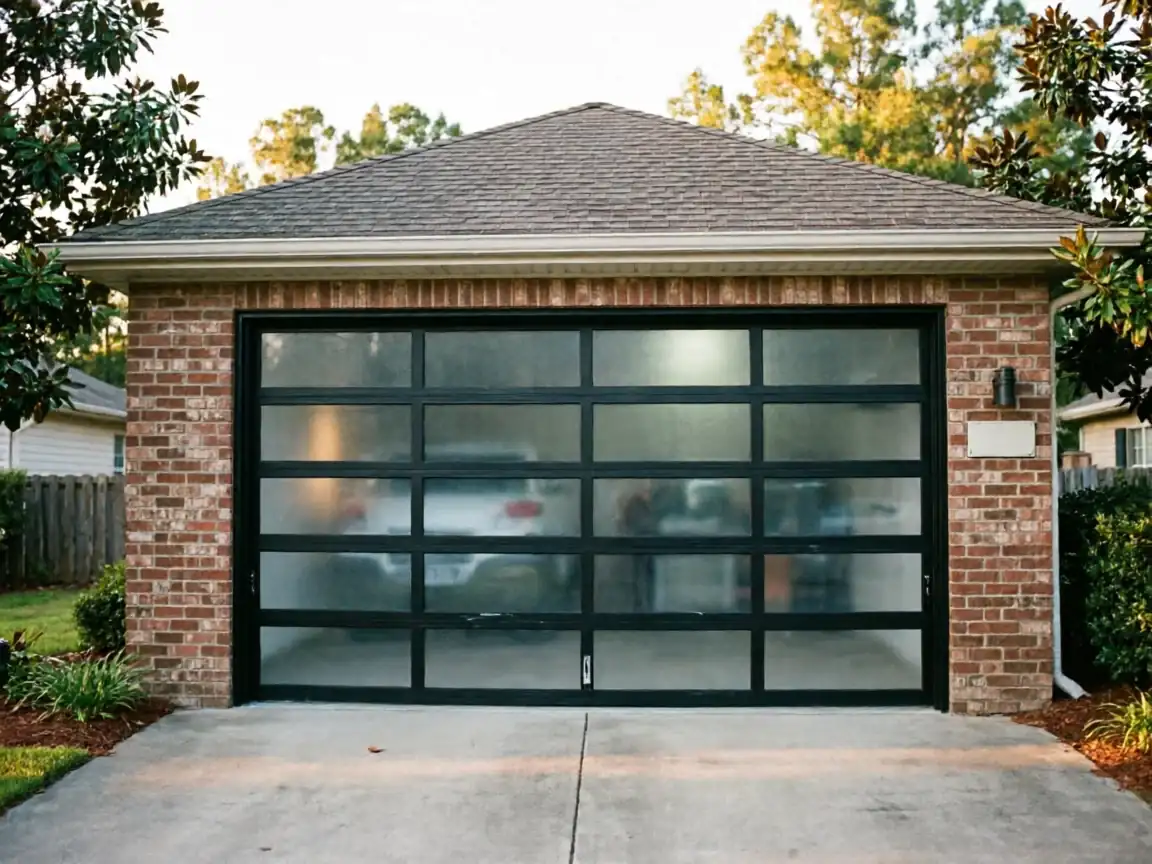
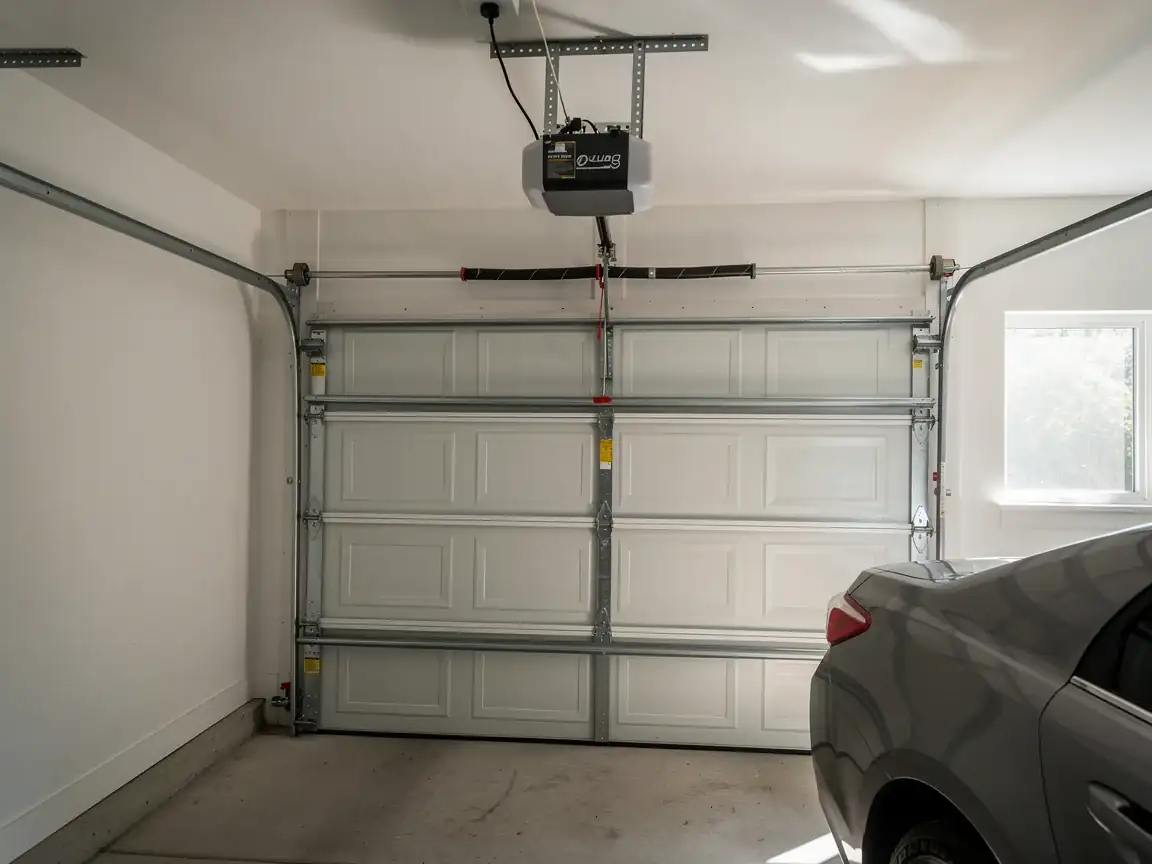
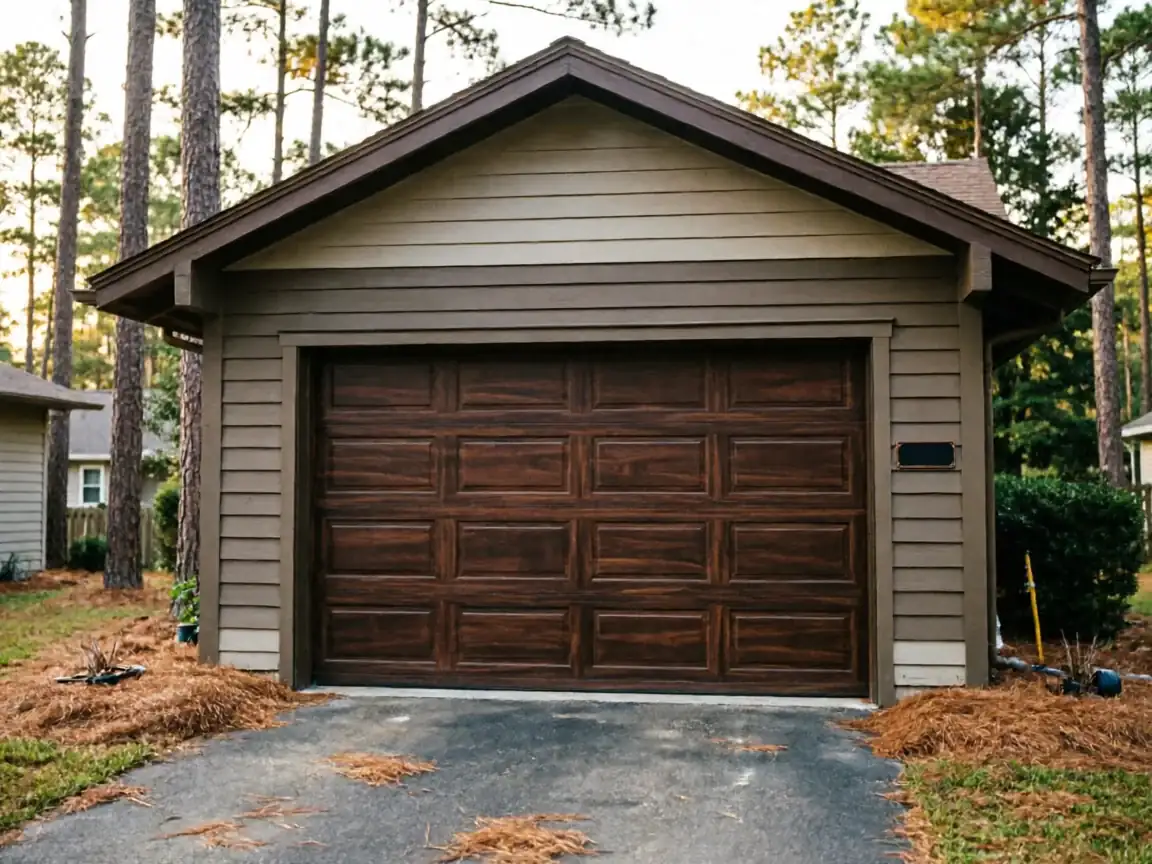
Most of the garage doors we see called about in Ball Ground sit on houses built around 2006, which puts them on factory torsion springs rated for a specific cycle count, not the older single-spring setups you'd find on a house from the 1970s. Those springs are wound tighter and matched to taller, heavier doors - a lot of builds from that era went with 7-foot sections instead of the standard 7-foot or taller to fit bigger SUVs and trucks in the garage. When one of those springs lets go, it's usually a clean snap, not a slow fray, because the wire gauge and galvanized coating used in mid-2000s production holds up until it doesn't.
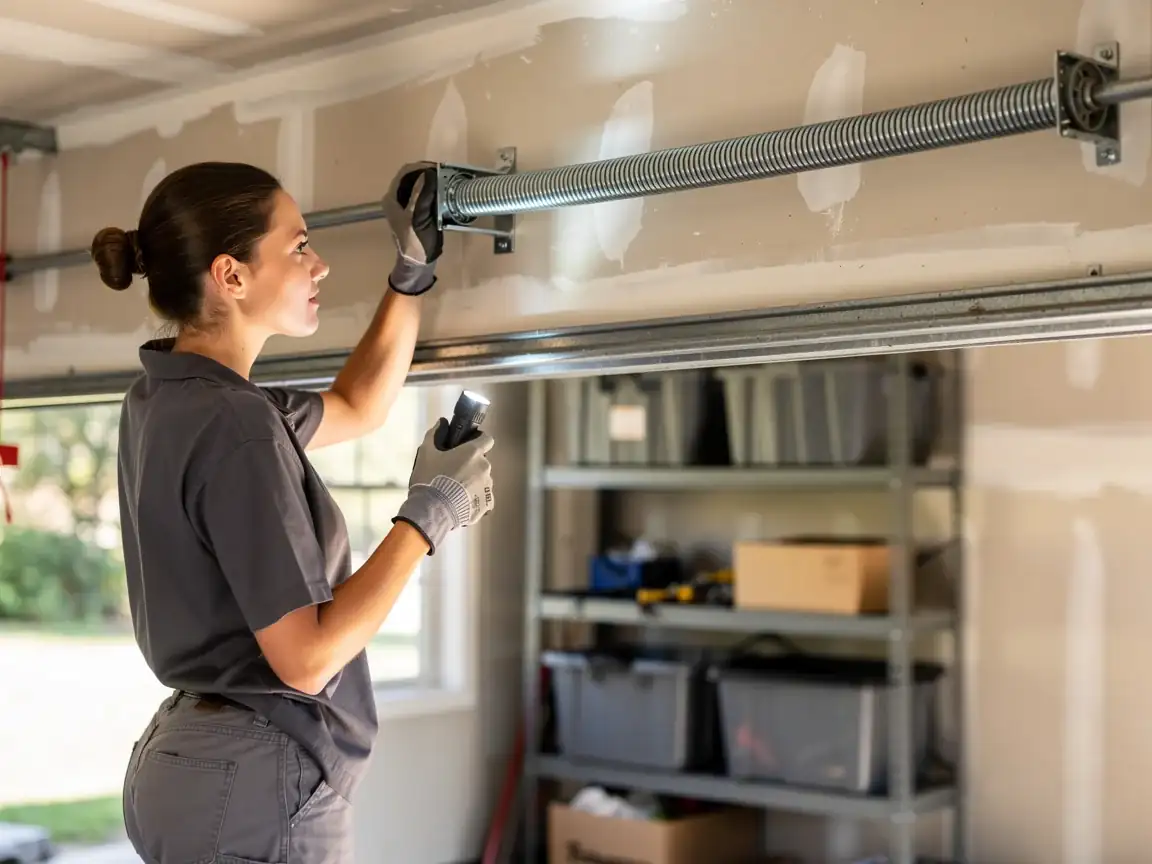
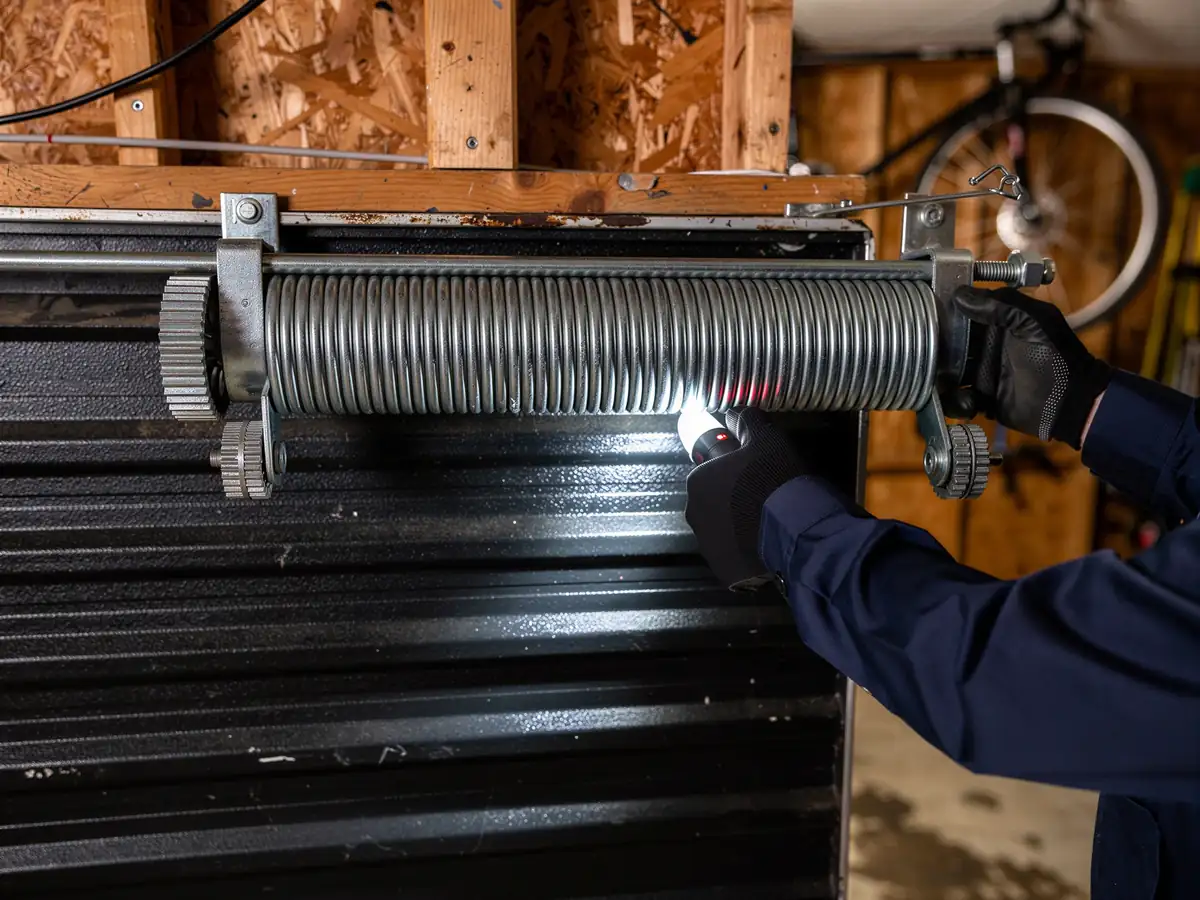
The fault we run into most is a single broken torsion spring on a double door, paired with a door that's heavier than the spring was ever meant to lift for more than about 10,000 cycles. If the house still has its original springs and nobody's replaced them since the build, that spring is pushing two decades of use, which is right about when torsion springs built to the standard cycle rating start failing. We don't see much of the really old hardware - no single bottom-mount springs, no doors from before the 1990s - because the area's housing just isn't that old.
Doing It Yourself
A torsion spring is wound under enough tension to break bones if the winding bar slips
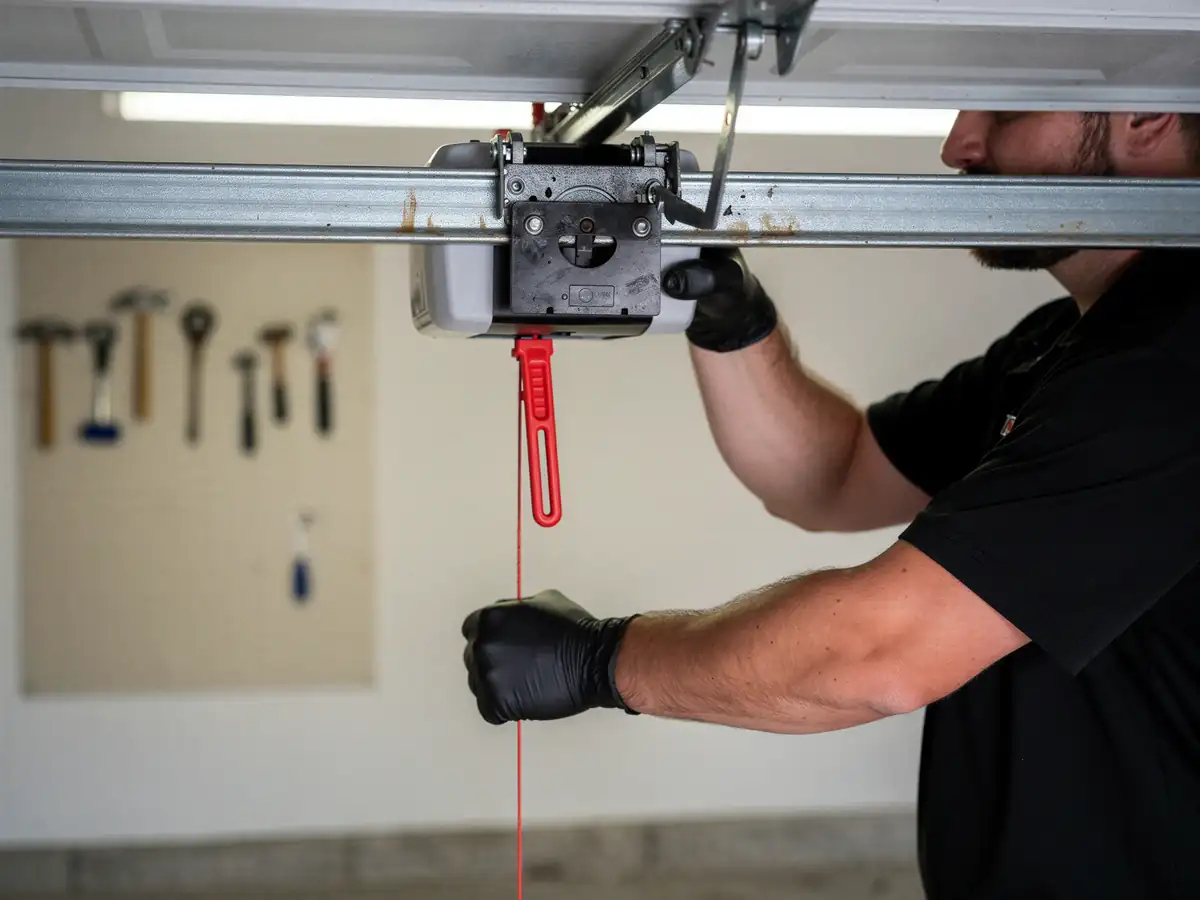
And the springs common to 2006-era double doors in this area carry more stored tension than the lighter single-door springs on older stock elsewhere. We won't walk you through winding one over the phone. If you're comfortable with hand tools, you can safely check whether it's a spring and not something else - look for a visible gap in the coil above the door, or try lifting the door by hand with the opener disconnected. If it won't stay up on its own, that's the spring, and it's a call, not a weekend project.
One thing you can do yourself without risk
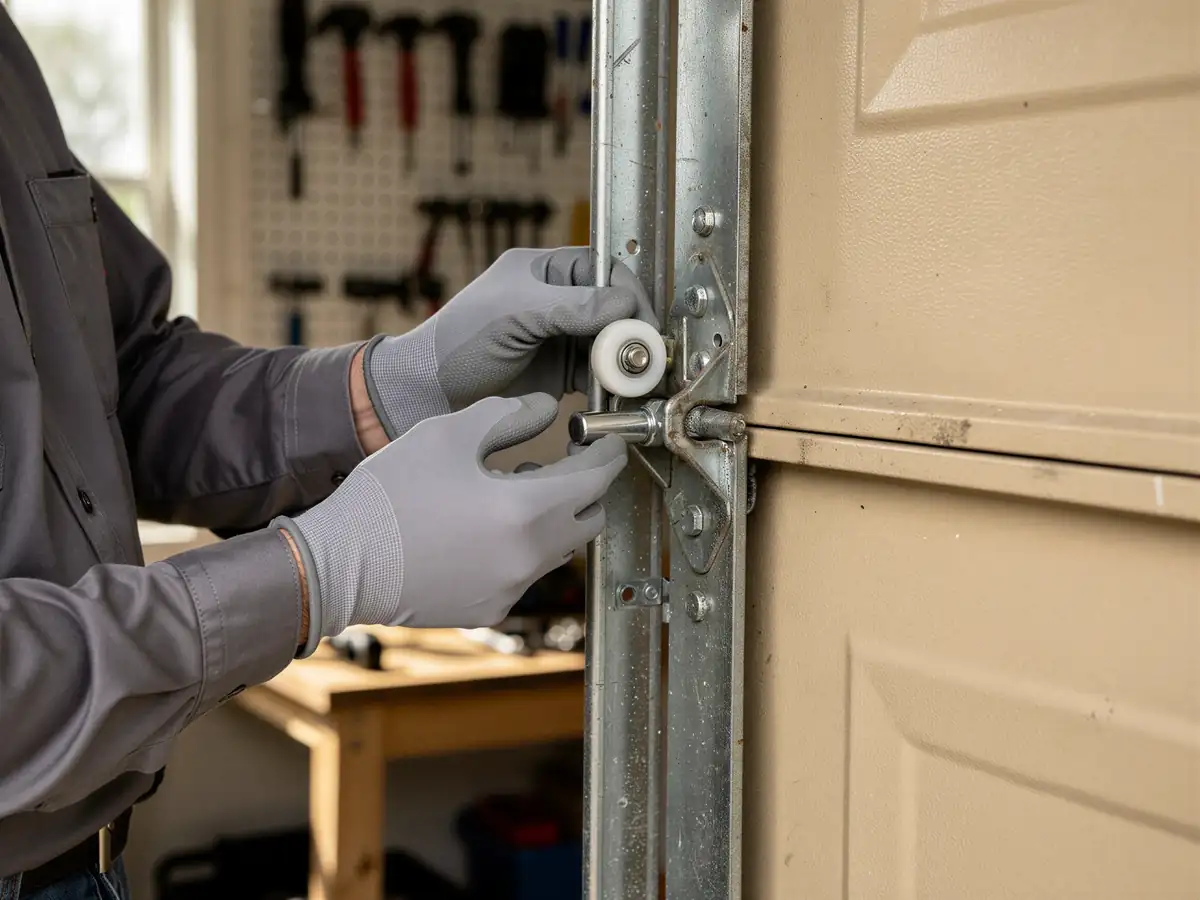
Check the cables running down either side of the door. If one looks frayed or has come off its drum, that's a separate repair but it's often tied to the same spring failure, and it's useful information to have ready when you call.
How It Shows Up
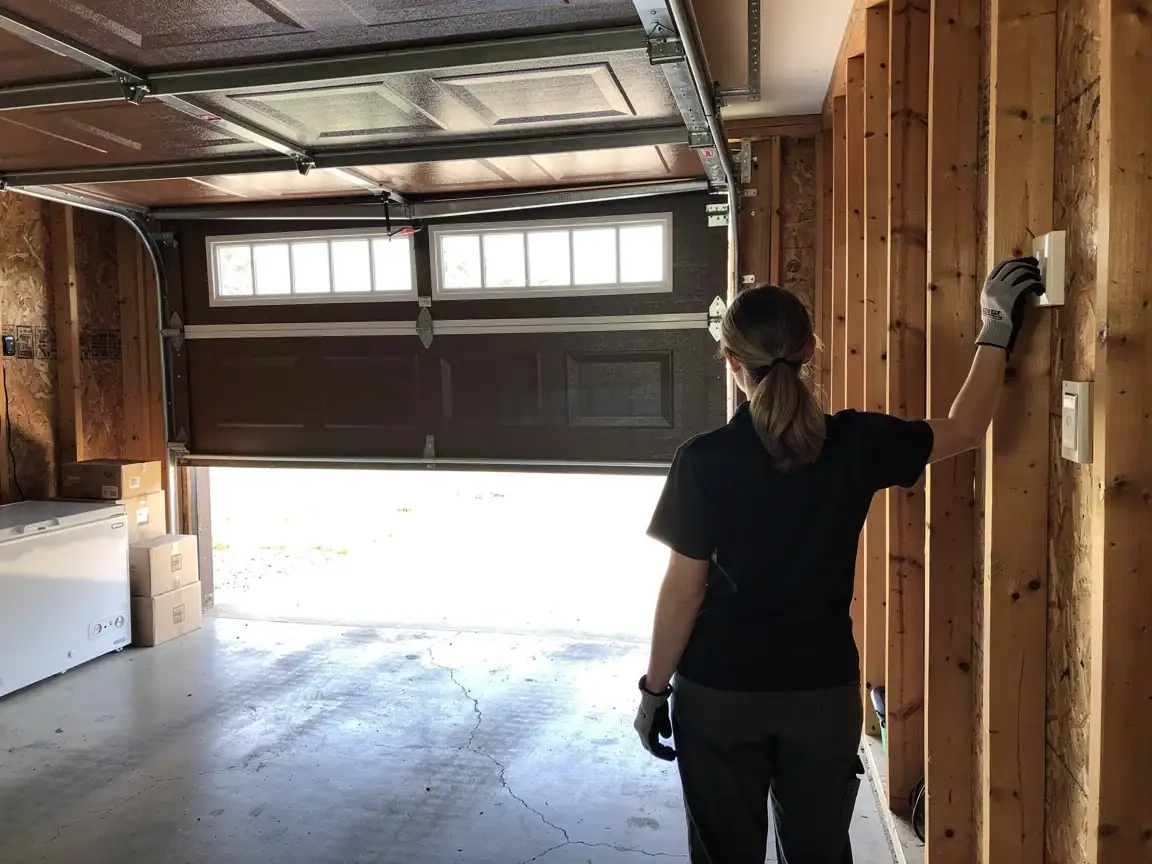
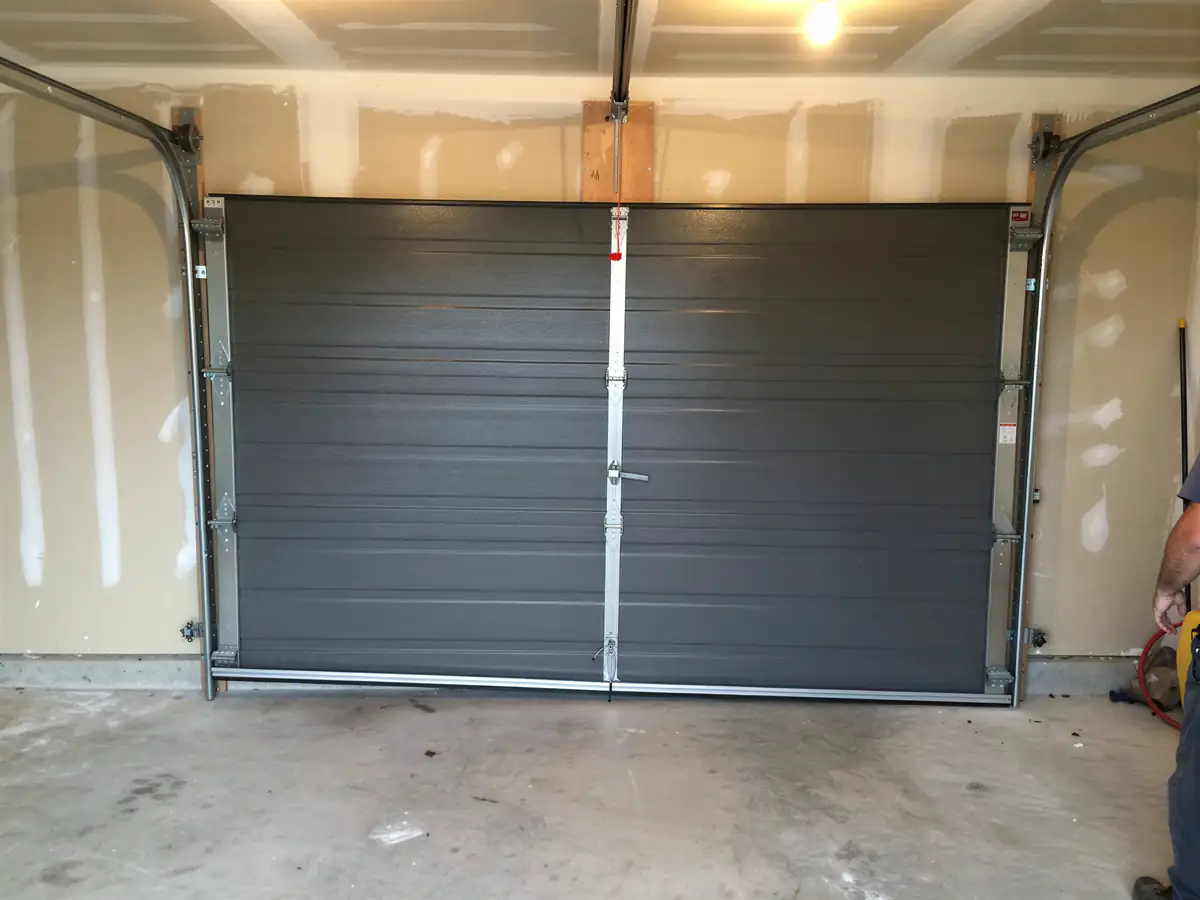
The door won't open past a few inches, or the opener strains and reverses itself partway up - that's the opener trying to lift a door with no spring assist, and openers aren't built to do that job alone for long. Sometimes you'll hear the bang first, a single loud crack from the garage, and find the door still down the next time you try it. On the double doors common to this area's newer builds, a broken spring often means the door feels unevenly heavy, dropping to one side as you lift it by hand, because one torsion spring was doing half the work and it's gone.
Booking a Visit
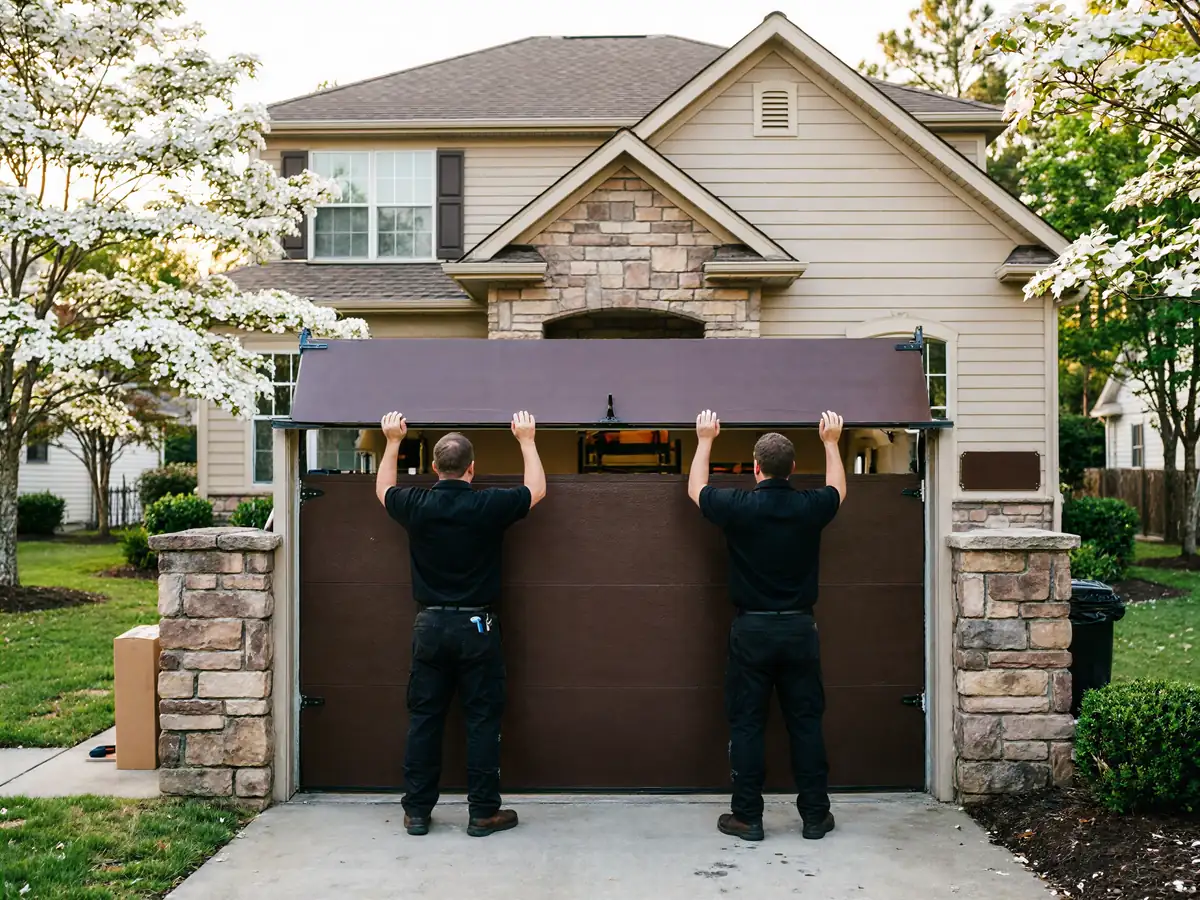
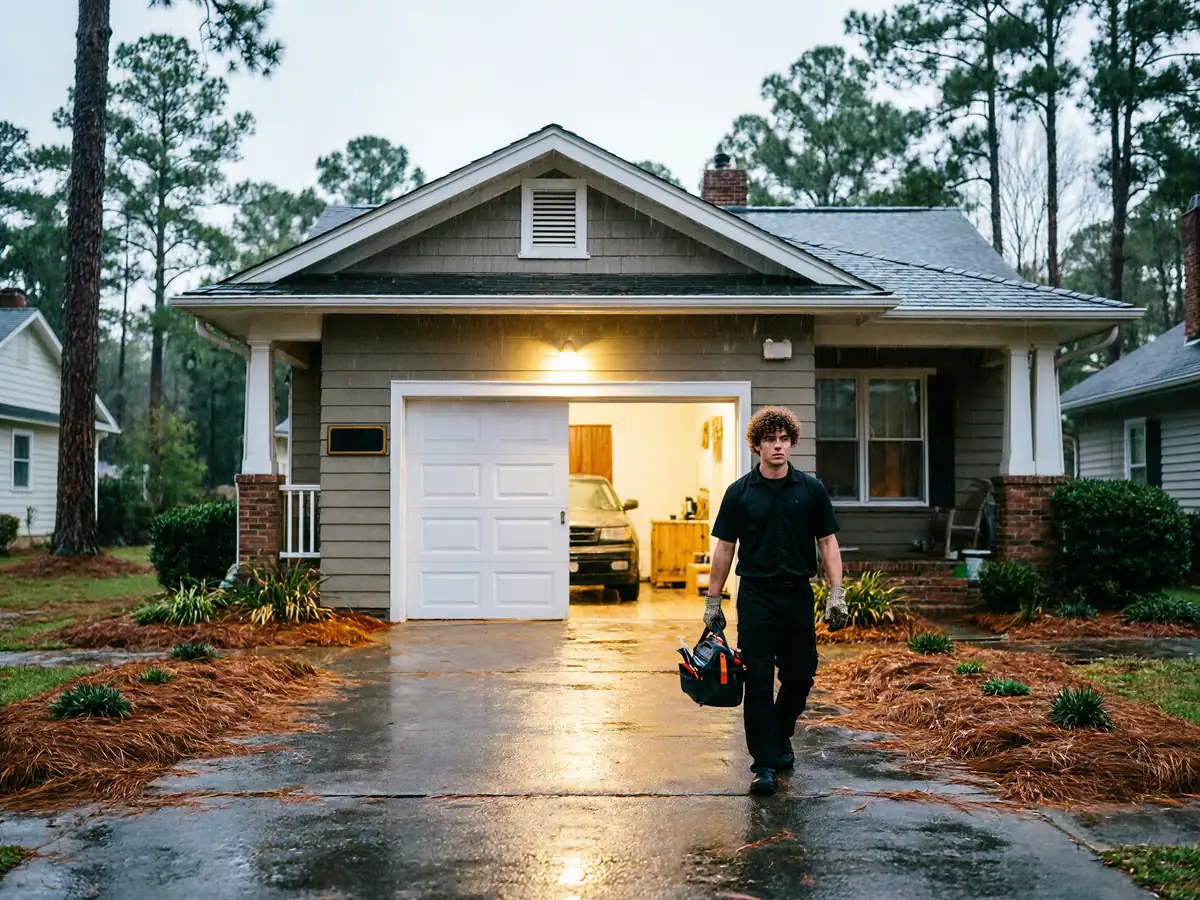
We run the job out of Milton, about 14 miles from Ball Ground, so the visit isn't a same-block drop-in - we schedule it in on the route. Call ahead and we'll ask what the door is doing (won't open, drops on one side, loud bang) so the truck comes out with the right spring size and gauge for a door built to the specs common in this area rather than guessing on site. Ball Ground is a smaller service area for us - around 1,024 households - so we're not running multiple trucks through it daily, which is more reason to book rather than hope for a walk-up fix.
What the Fix Involves
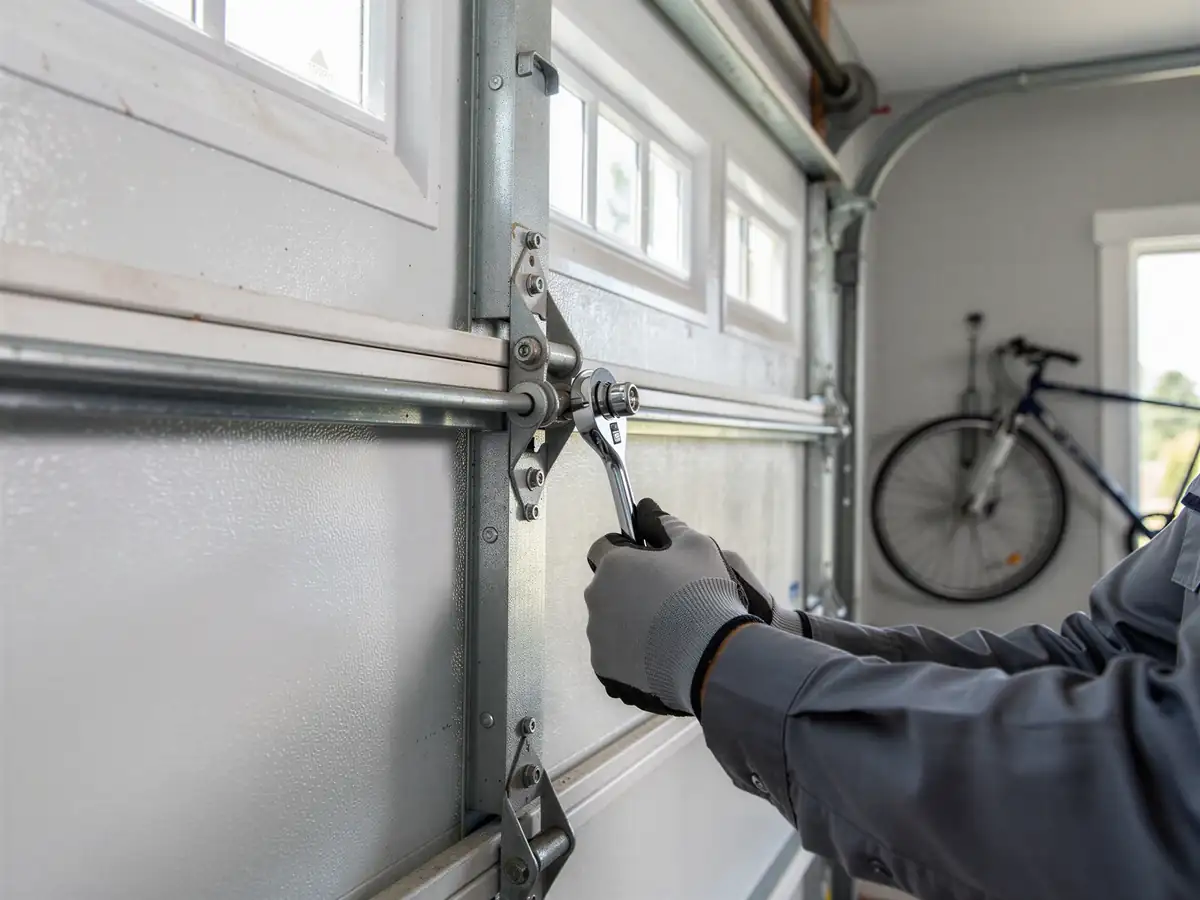
We measure the existing spring's wire diameter, coil length, and inside diameter rather than guessing off the door's age, because even within houses built the same year the spring setup can vary by manufacturer. Both springs get replaced as a pair on a double-spring system even if only one broke - running a new spring against a fatigued one just moves the failure to the other side, usually within a year. We check the cables, drums, and center bearing plate while we're in there, since those parts take the same stress and show wear on the same timeline as the spring. One honest limit: if the door itself is warped or the track is bent from the door dropping suddenly, that's a separate repair we'll flag rather than fold into the spring job quietly.