What Can Go Wrong
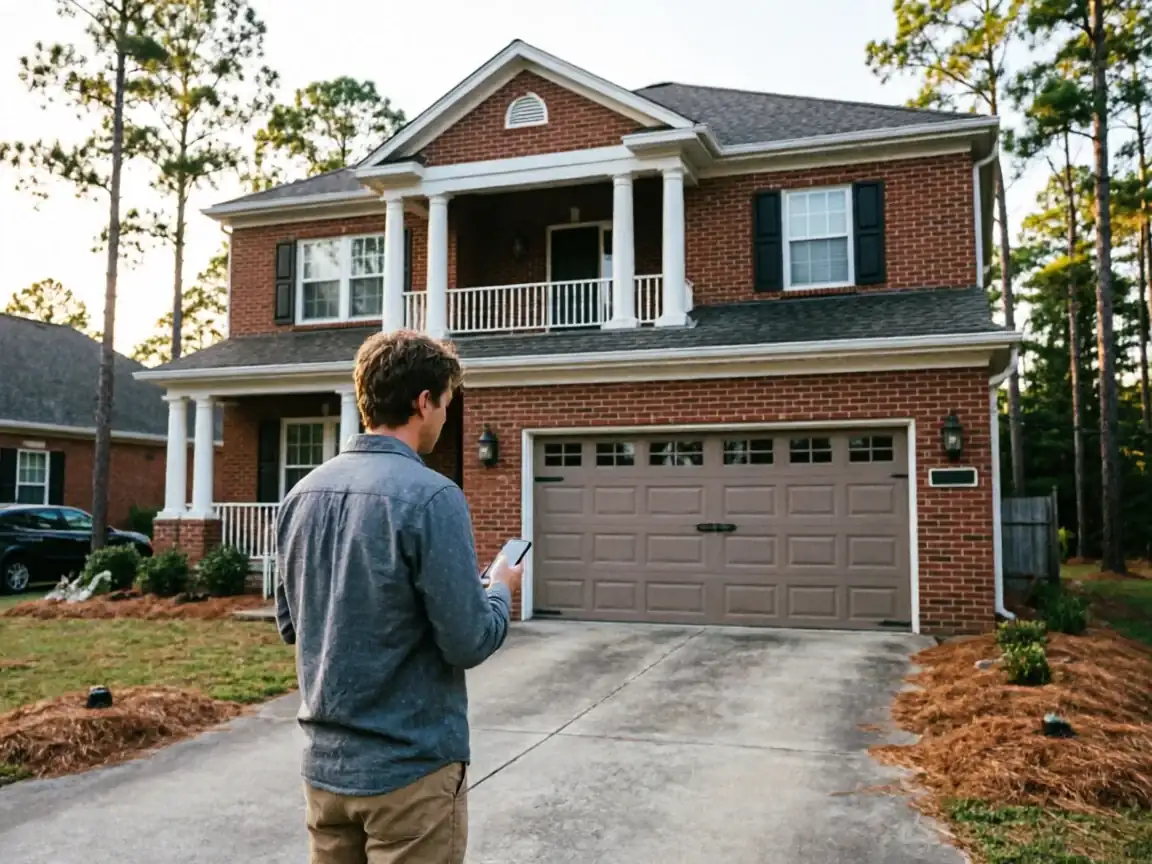
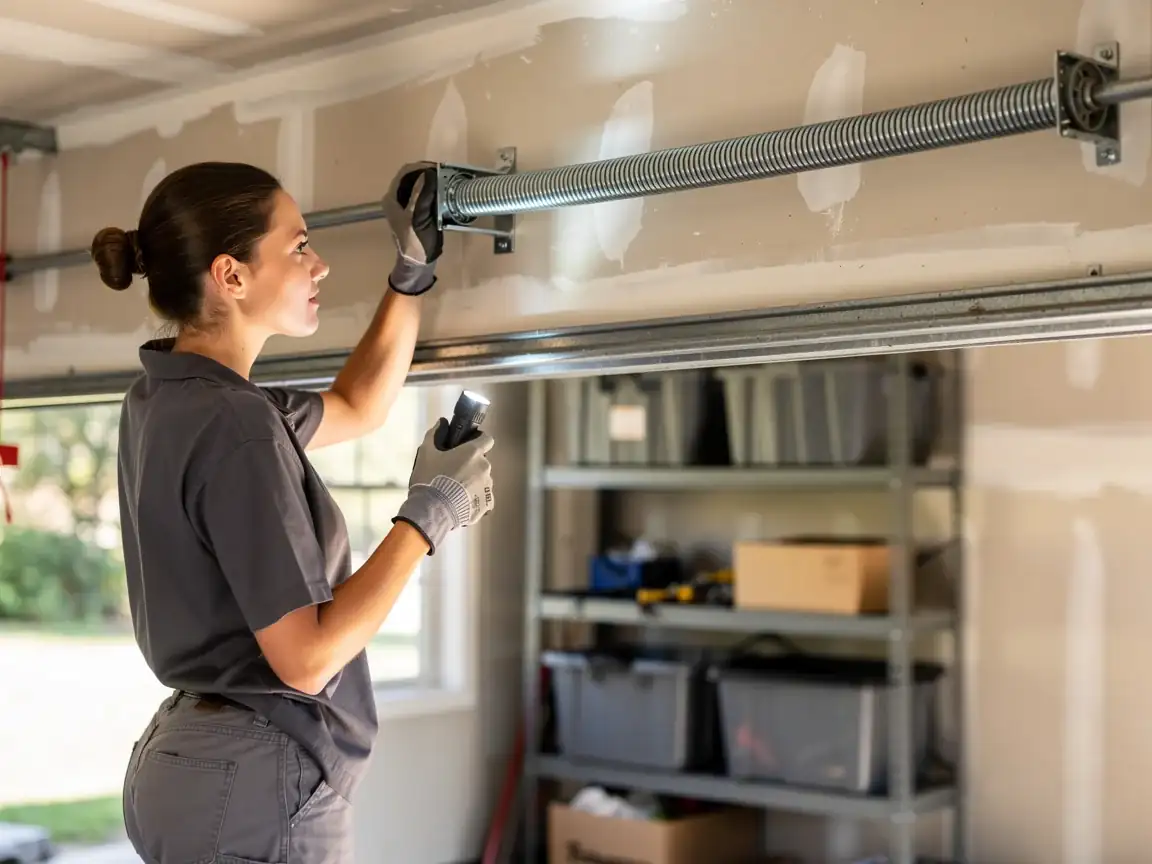
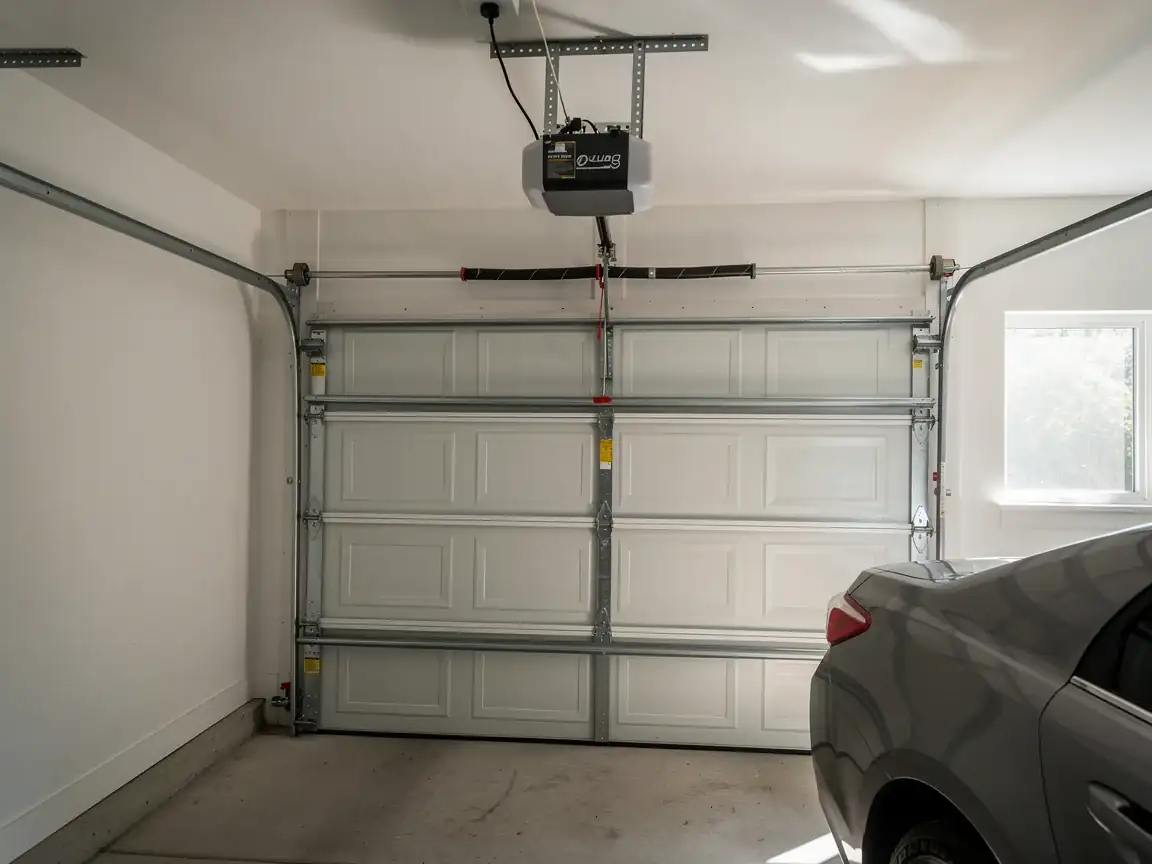
Most houses in Ball Ground went up around 2006 - a good fourteen years newer than the median across the rest of the territory we cover, where the build years run 1964 to 2007. That matters because almost nobody here has touched the original hardware yet. The torsion spring that went up with the house is likely still the one holding the door, and it's now pushing eighteen years of cycles. Springs are rated in cycles, not years, and a spring that's done 10,000 open-close cycles is near the end whether it looks fine or not.
The other piece from that era is the opener. 2006 construction means post-1993 safety-sensor requirements were already standard, so the photo eyes at the bottom of the track aren't the issue - it's usually the drive itself. Belt and chain drives from the mid-2000s are mechanical parts with a working life, and after this many years the belt stretches, the chain sags, or the gear inside the unit strips. None of that is dramatic until the day it is: a door that won't open, or one that opens and won't stop.
Cold-weather swings in this area stiffen grease in old bearings and can make a tired spring let go without much warning - usually on the first truly cold morning of the season.
Doing It Yourself
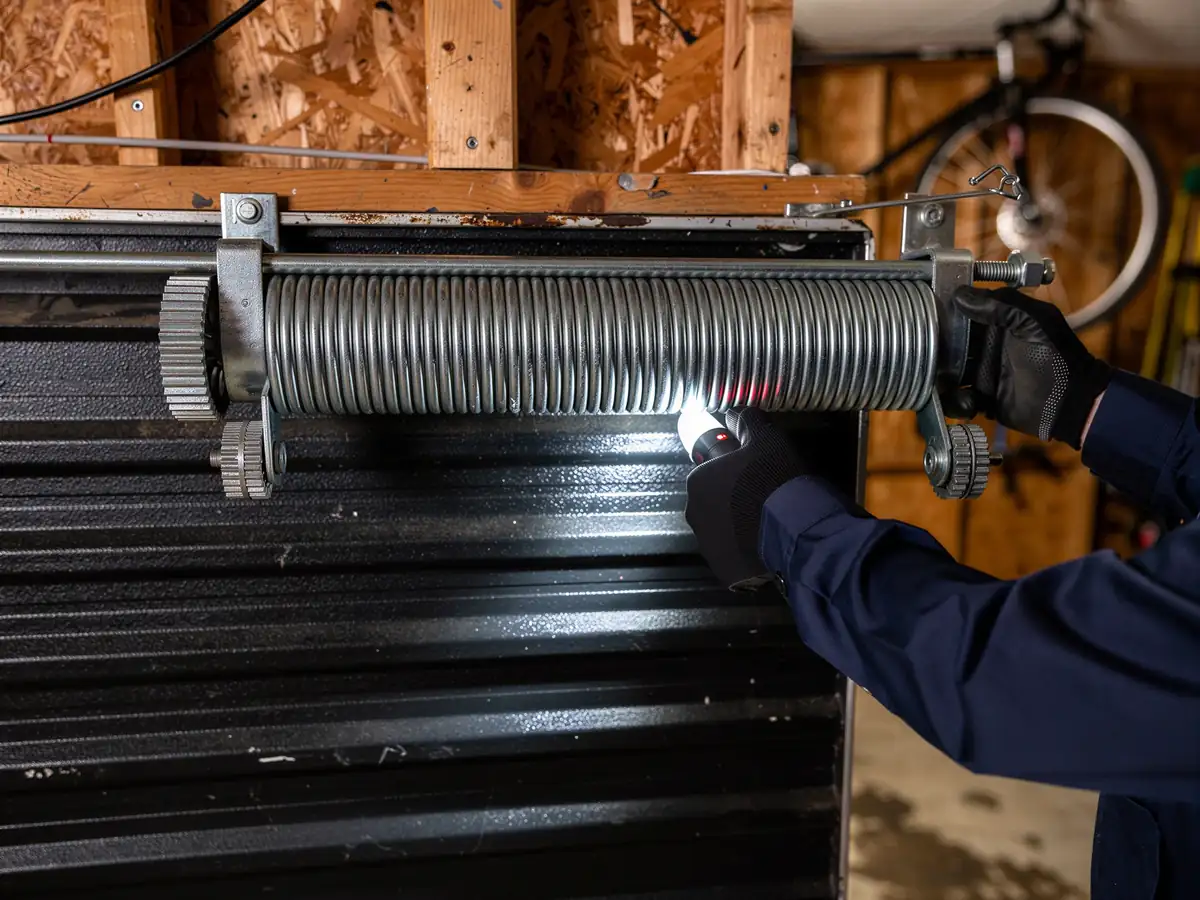
A torsion spring on a double door carries real tension
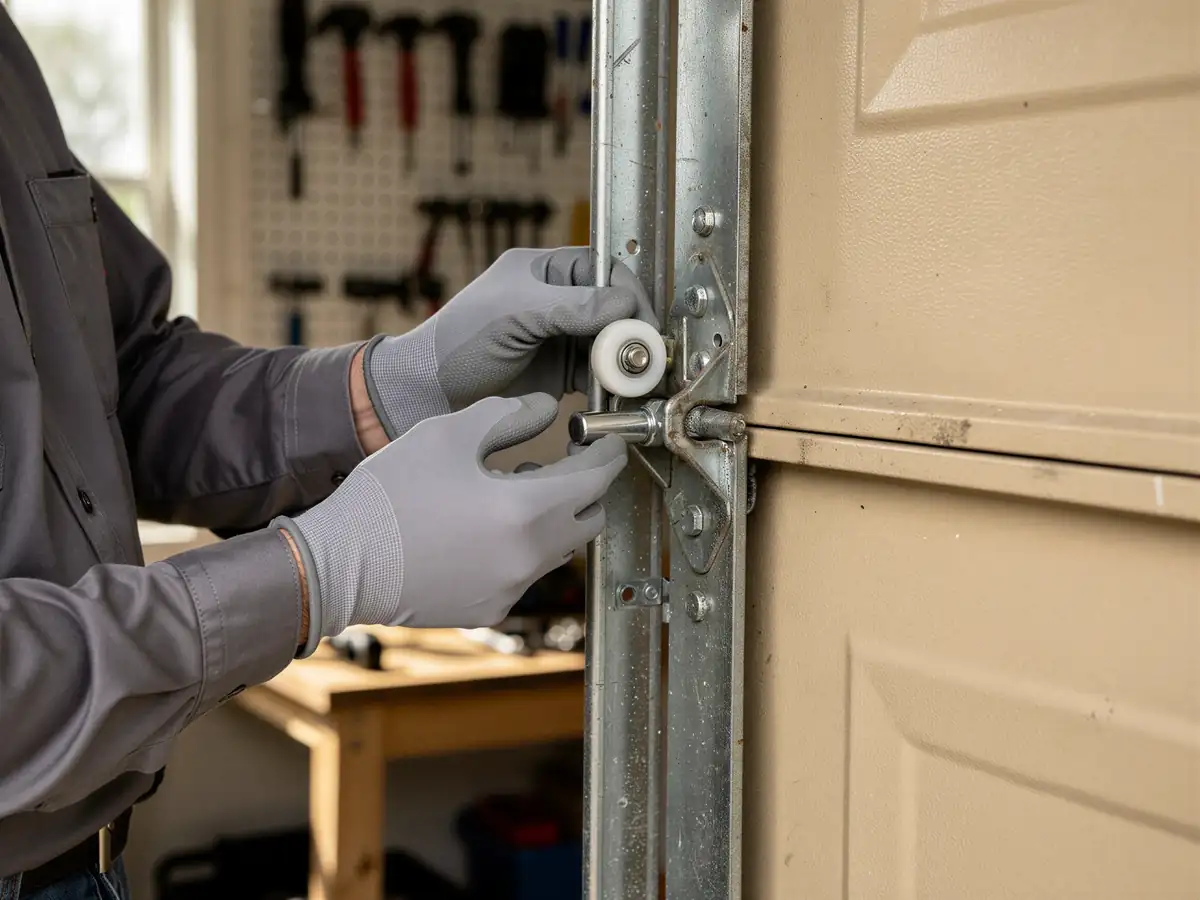
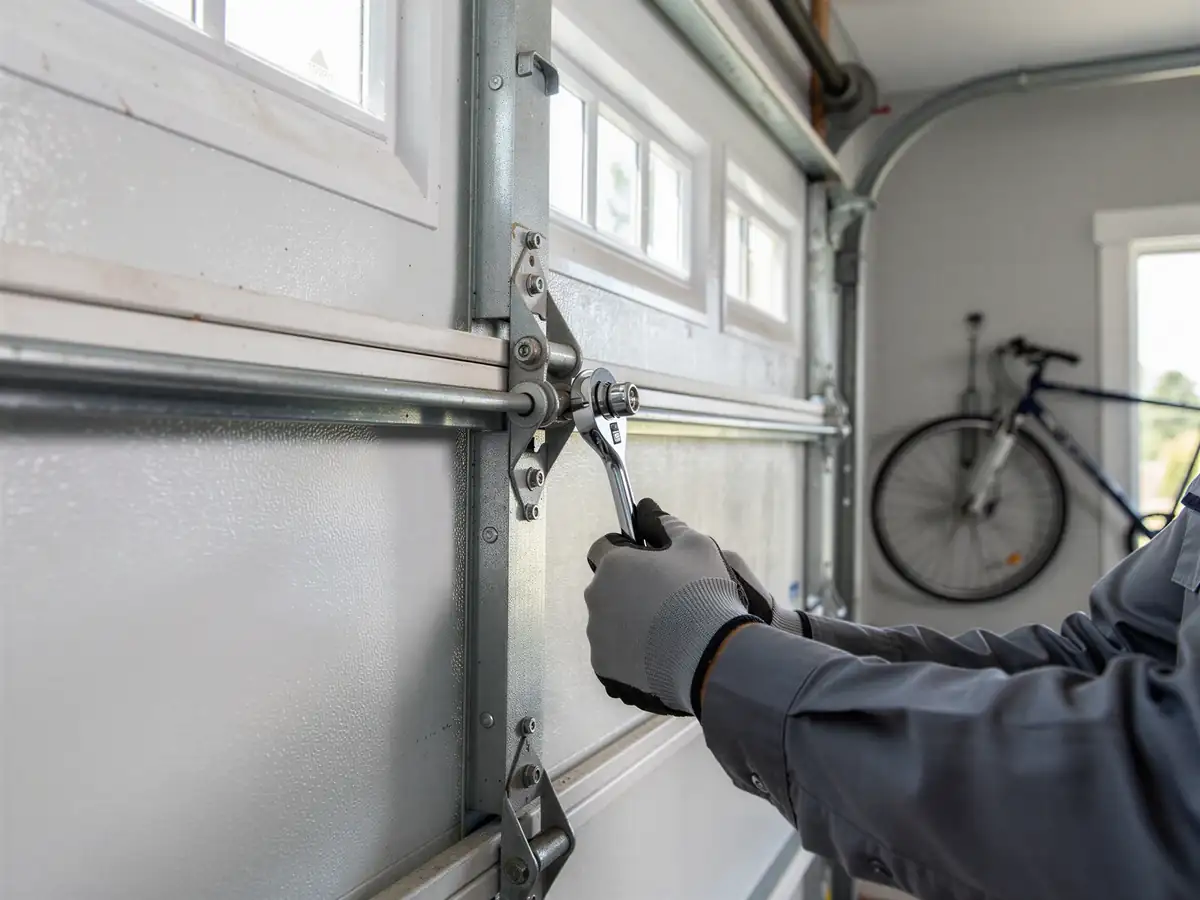
And the bar it's wound around can do damage if you're not set up for it. We're not going to walk you through releasing one here - that's a repair call, not a Saturday project. What you can safely do yourself: wipe down and lightly grease rollers and hinges, check that the bottom brackets aren't rusted through, and listen for grinding on the way up, which usually means a bearing or a roller, not the spring.
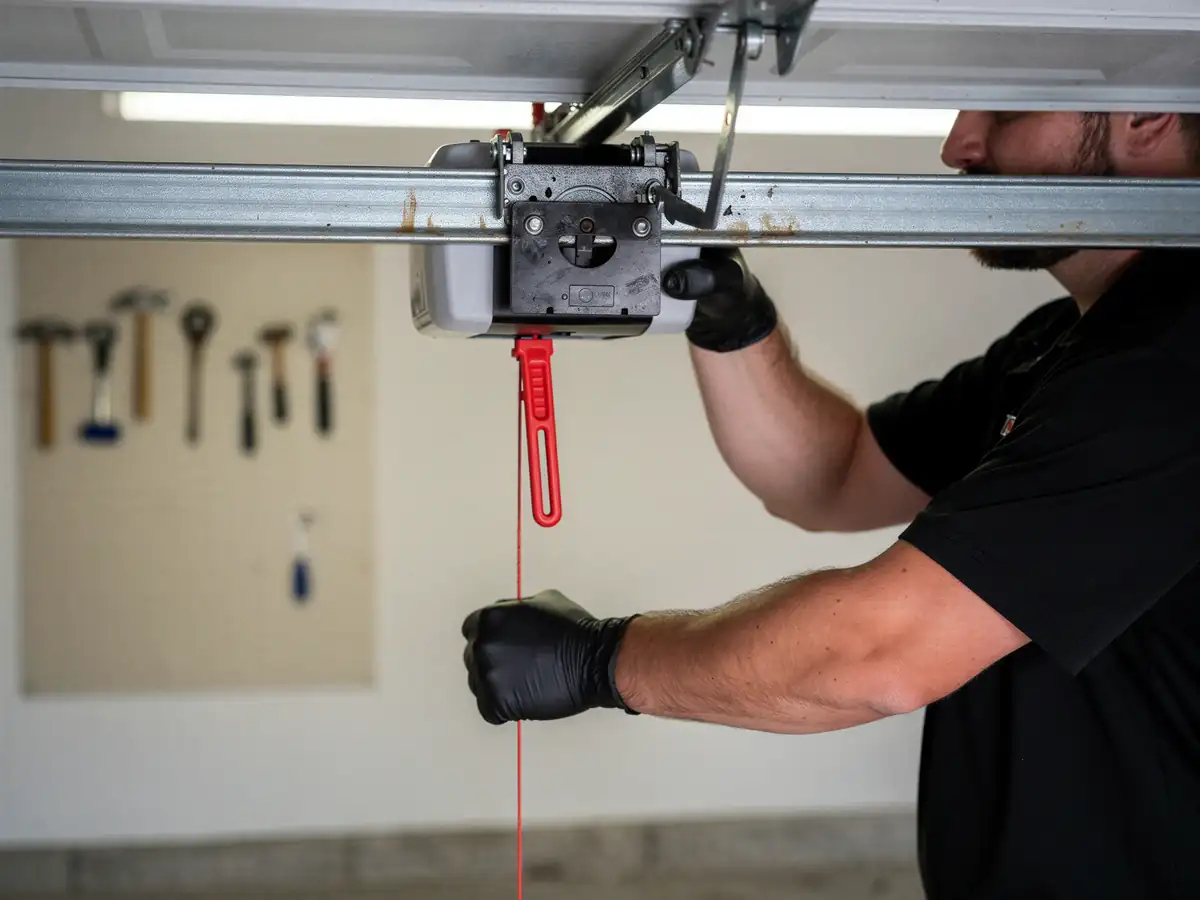
If your opener is the original 2006 unit and it's started making a new noise
Don't keep running it to see if it clears up. A motor that's straining against a bad spring burns itself out faster, and then you're paying for two repairs instead of one. Unplug it, operate the door by hand if you have to, and get it looked at before the opener takes the hit for a spring problem.
How It Shows Up
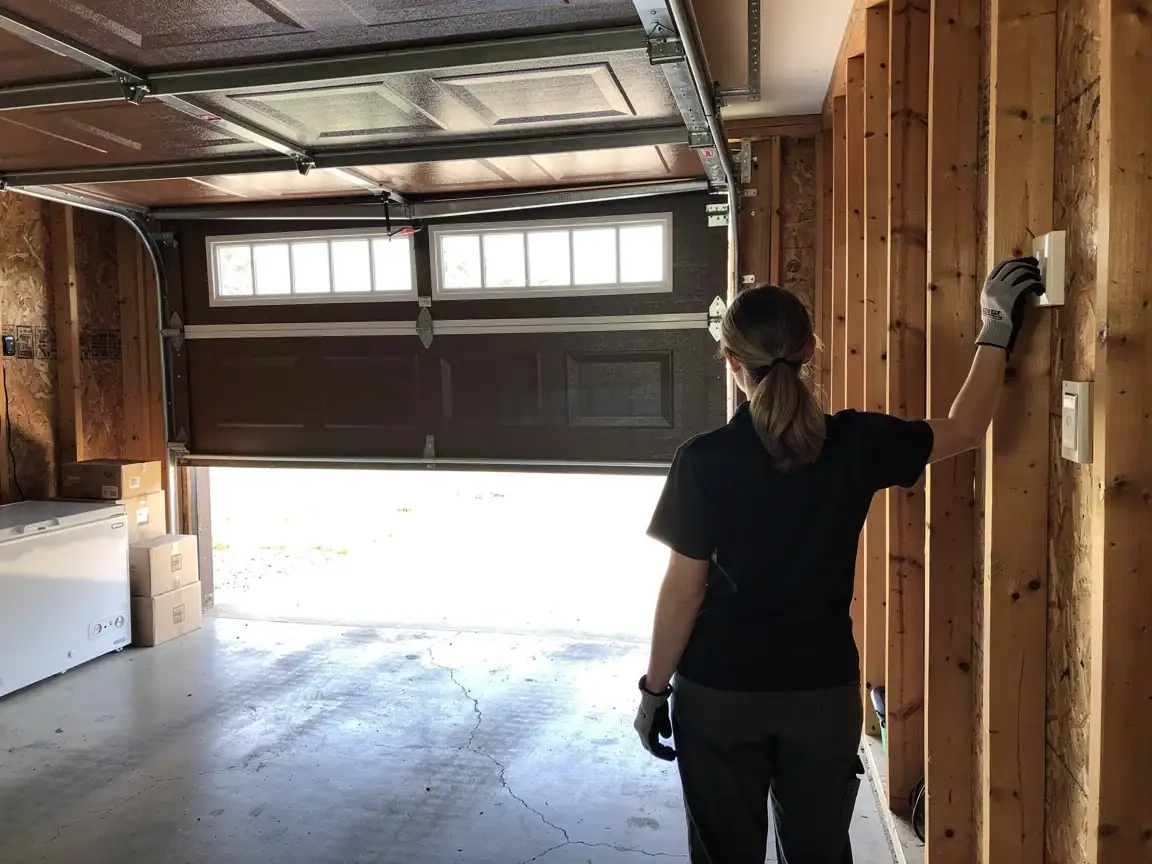
The door opens slower than it used to, or the opener's motor sounds like it's working harder for the same lift. Sometimes it's a loud bang from the garage - that's a spring letting go, and if it happens, don't try to open the door until it's replaced. Sometimes it's quieter: the door starts to sag unevenly on one side, which usually means one of a pair of springs has already gone soft while the other is still holding.
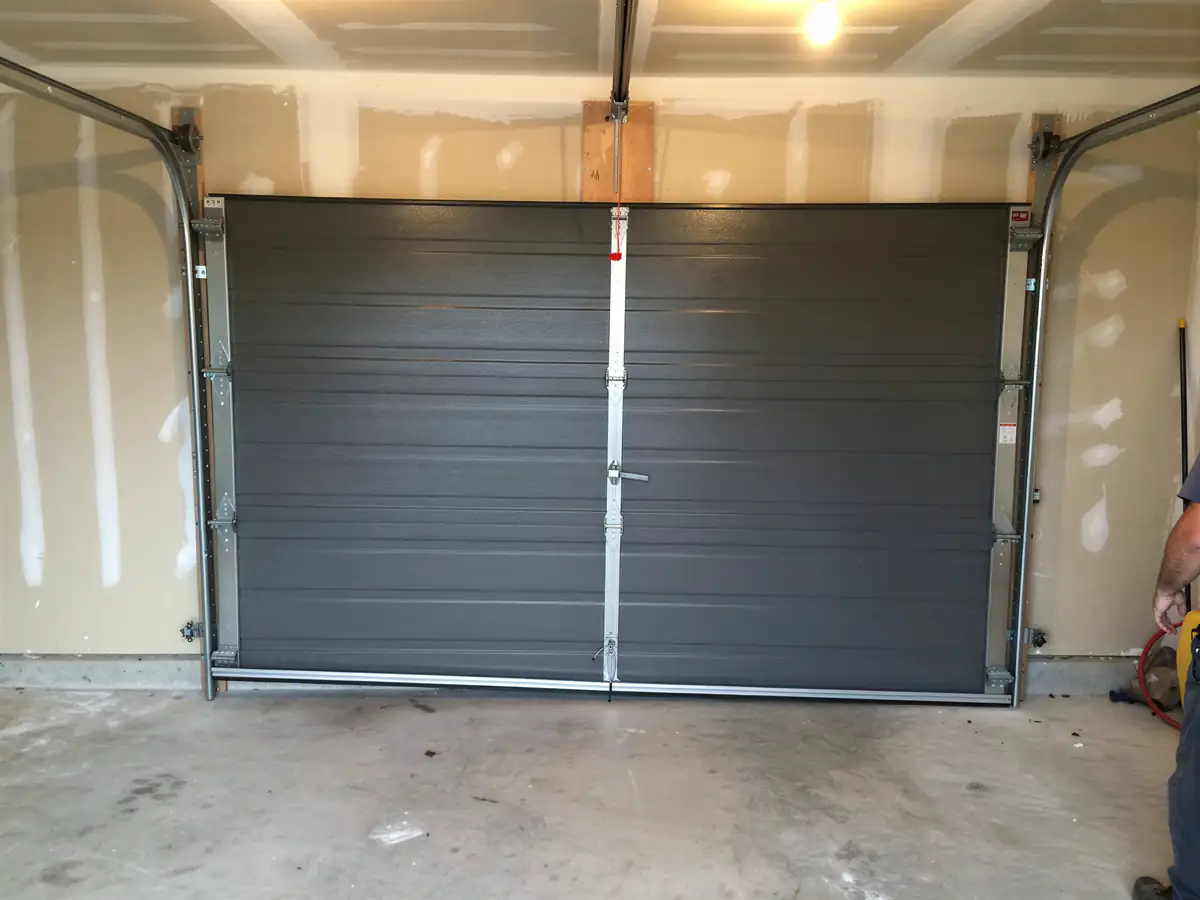
On a 2006-era door, we also see tracks pulling away from the frame where the original screws have loosened over nearly two decades, and rollers that have worn flat on one side instead of staying round. None of this is specific to any one house - it's just what eighteen years does to the hardware a builder put in once and nobody's replaced since.
Booking a Visit
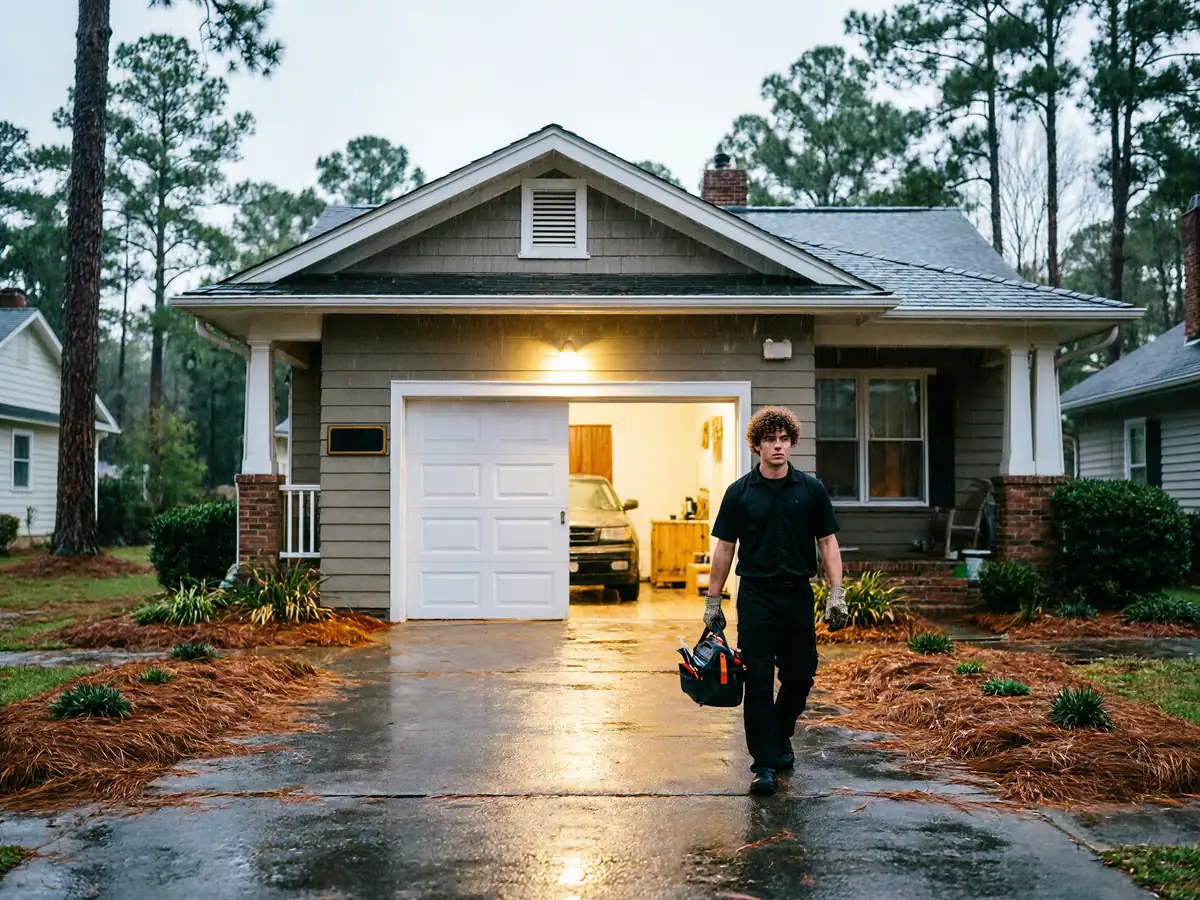
We run this job out of Milton, about 14 miles from Ball Ground, so a visit here is a scheduled call rather than a same-day drop-in. When you call, tell us the age of the house if you know it and what the door is doing - grinding, sagging, a bang, an opener that runs but doesn't lift. That tells us what to bring on the truck instead of guessing once we're there.
We'll ask about the opener brand if it's visible on the unit, and whether it's a single or double door, since a double door almost always runs two springs and both get checked even if only one has failed.
Time on the Job
A straightforward spring swap on a double door, done once we're on site, usually runs under two hours including checking the cables and rollers while the spring is off anyway - that's standard practice, since those parts are easiest to inspect with the tension released
An opener motor replacement or belt swap takes longer if the mounting bracket or rail has to come down too.
What we won't do is promise a same-day fix sight unseen
Parts for a 2006-era opener aren't always something we're carrying standard on the truck, and if a specific gear kit or belt needs ordering, that adds a day or two. We'd rather tell you that up front than have you waiting on a truck that isn't coming.
What the Fix Involves
For a spring, that means matching the wire gauge and coil length to the door's actual weight, not just swapping in whatever's close - undersized springs fail fast and oversized ones strain the opener. For hardware this age, we're also checking the cable ends and the bottom brackets, since corrosion on an eighteen-year-old bracket is common even on a house that otherwise looks new.
For an opener, if the motor itself has gone, replacement usually makes more sense than a rebuild - by this age the circuit board and motor windings are both near the end of their rated life, and fixing one without the other just delays the next call. We'll tell you plainly when a repair isn't worth the money against a new unit, rather than billing you twice for the same door.