What Causes It Around Here
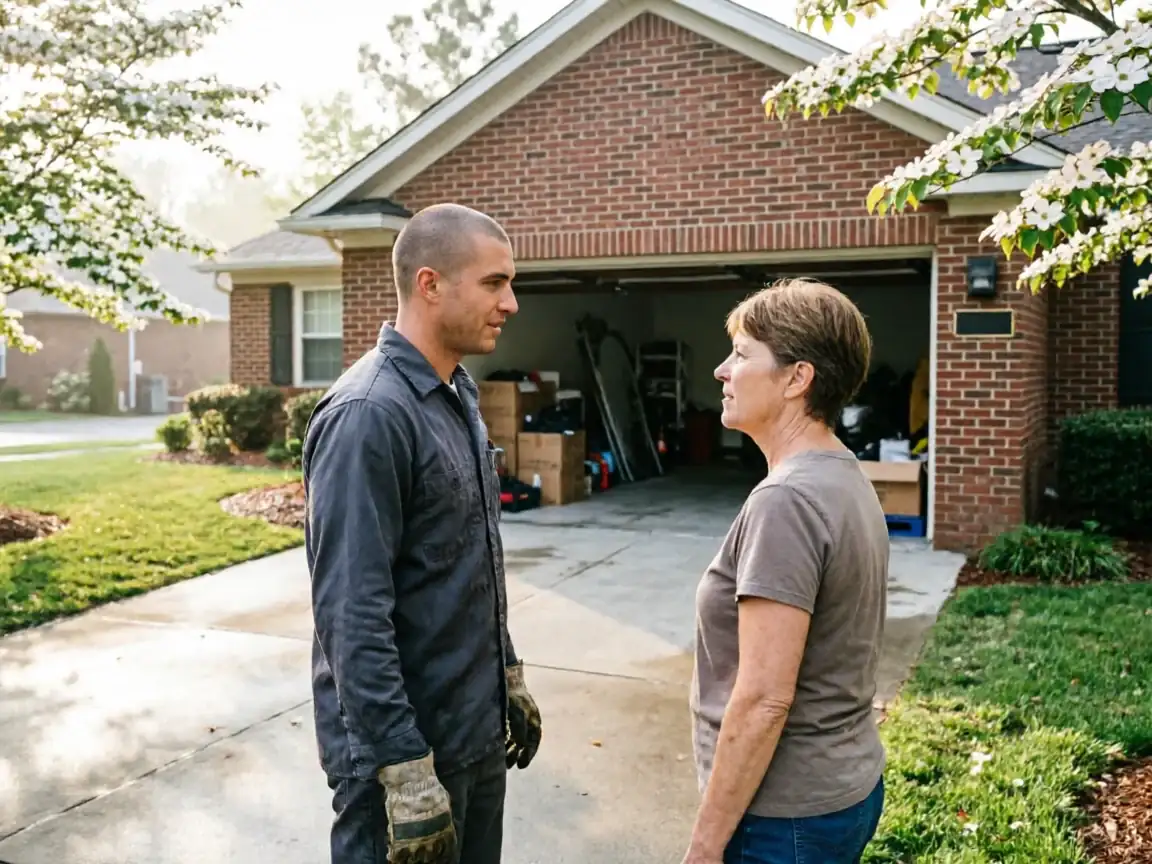
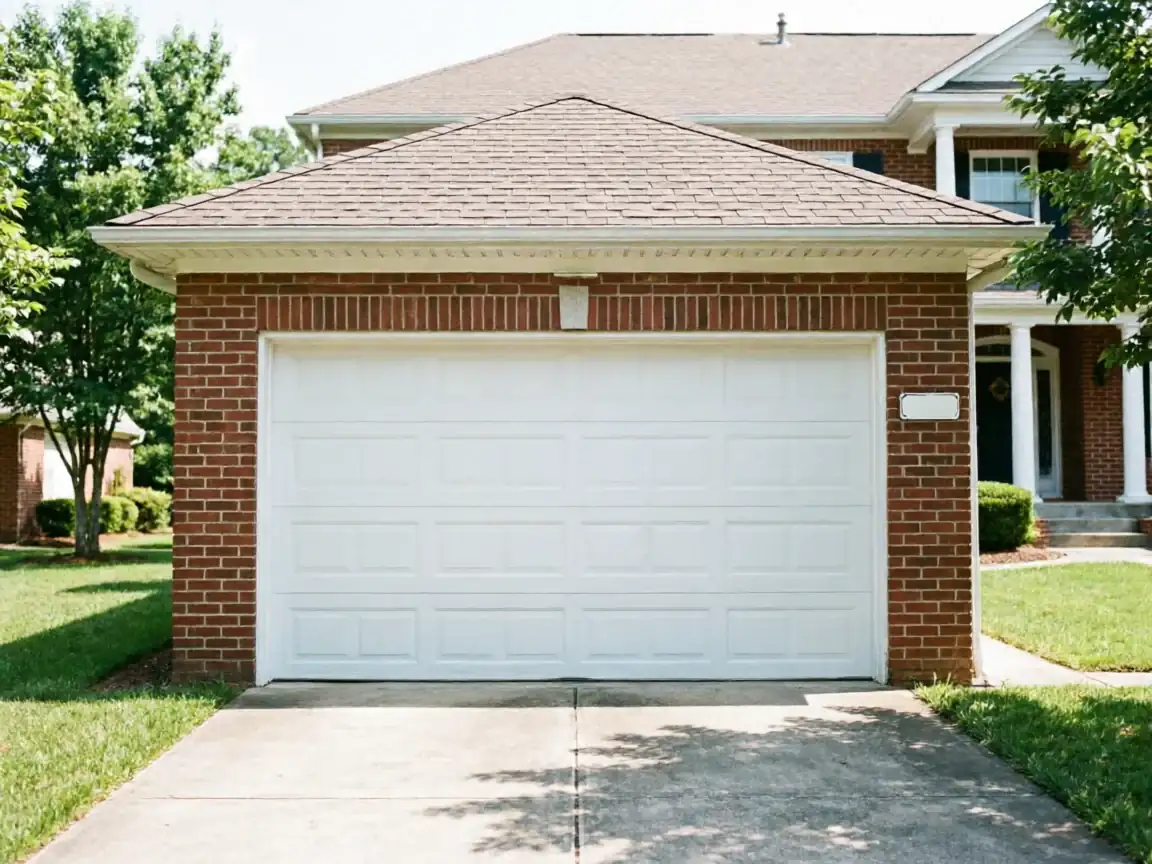
Most of the housing stock across this service area went up between 1964 and 2007, with the bulk of it dating to the 1980s and 90s. That matters for rollers because builders in that window almost always spec'd steel rollers with open bearings, or early nylon rollers with thin stems that were never meant to carry 30-plus years of cycles. A door that's gone up and down twice a day since 1988 has put well over 20,000 cycles on hardware that was rated for a lot less than that.
The climate band here is cold-moderate, which means real freeze-thaw swings but not the brutal winters you'd get further north. That swing is still rough on rollers. Moisture gets into the bearing races during wet cold snaps, then the metal contracts as temperatures drop, and the combination pits the bearing surface and flattens the roller wheel on one side. You get a flat spot that thumps every time it rolls past the same point in the track.
Houses built in the 90s wave of construction across the 10 named areas in this service territory tend to have steel track with steel rollers paired together, which is the worst combination for noise and wear once the factory lubricant is gone. That's the single most common roller call we get, and it's almost always tied to original hardware that's simply aged out.
What the Fix Involves
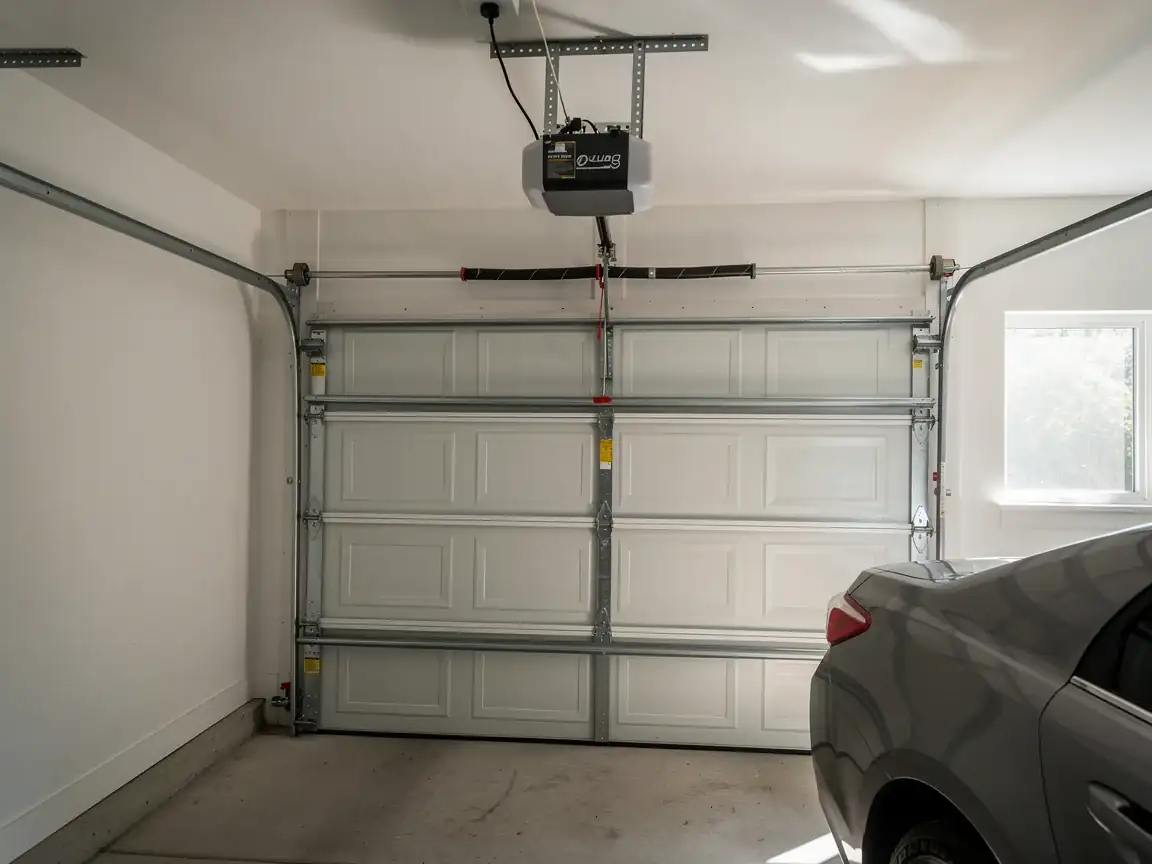
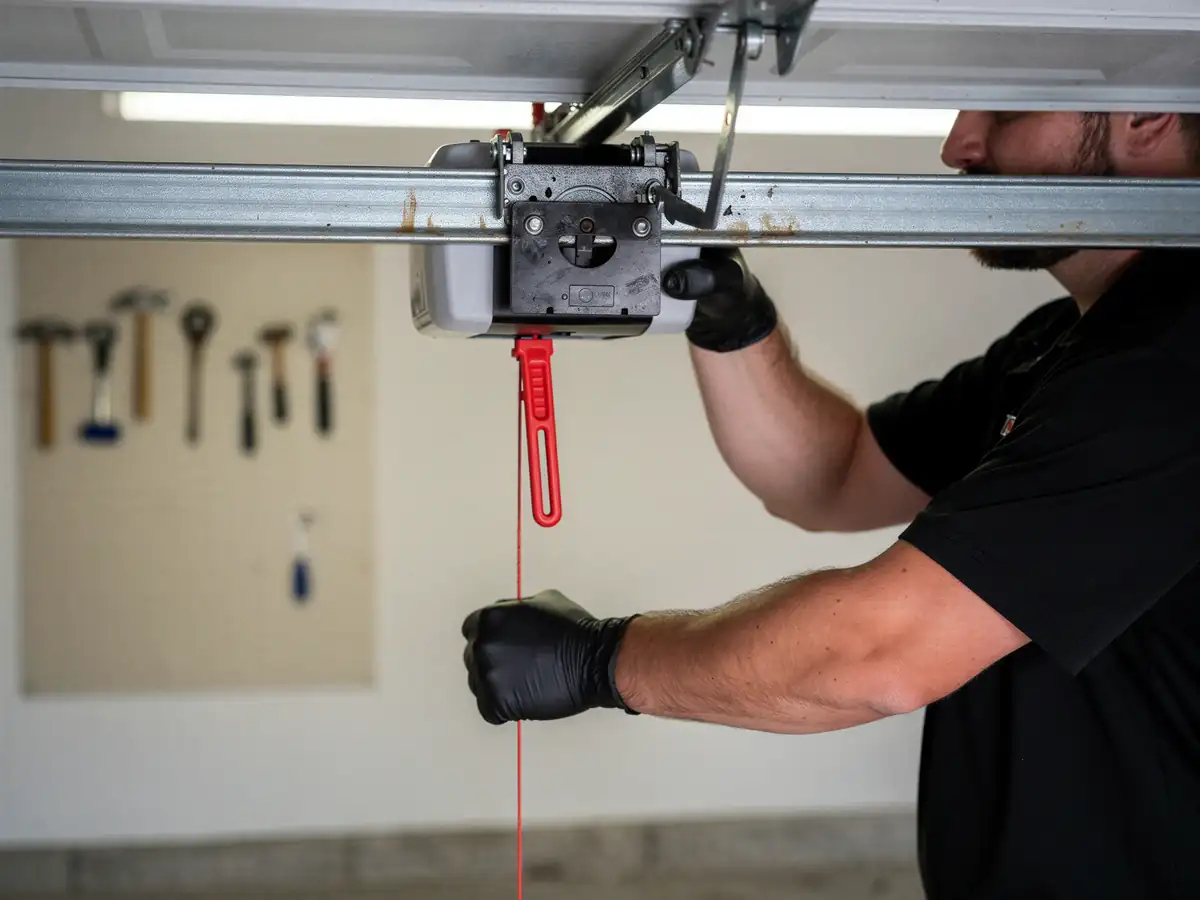
Roller replacement is a hardware swap, not a motor job
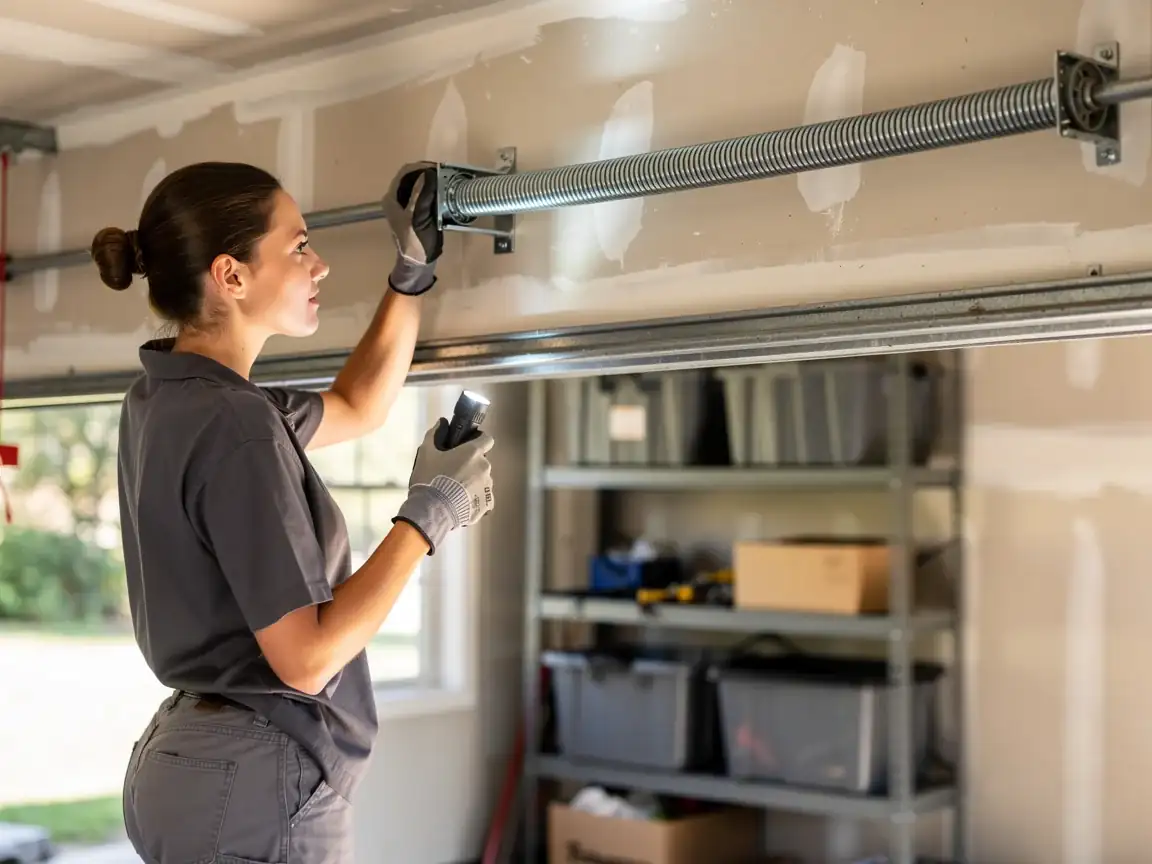
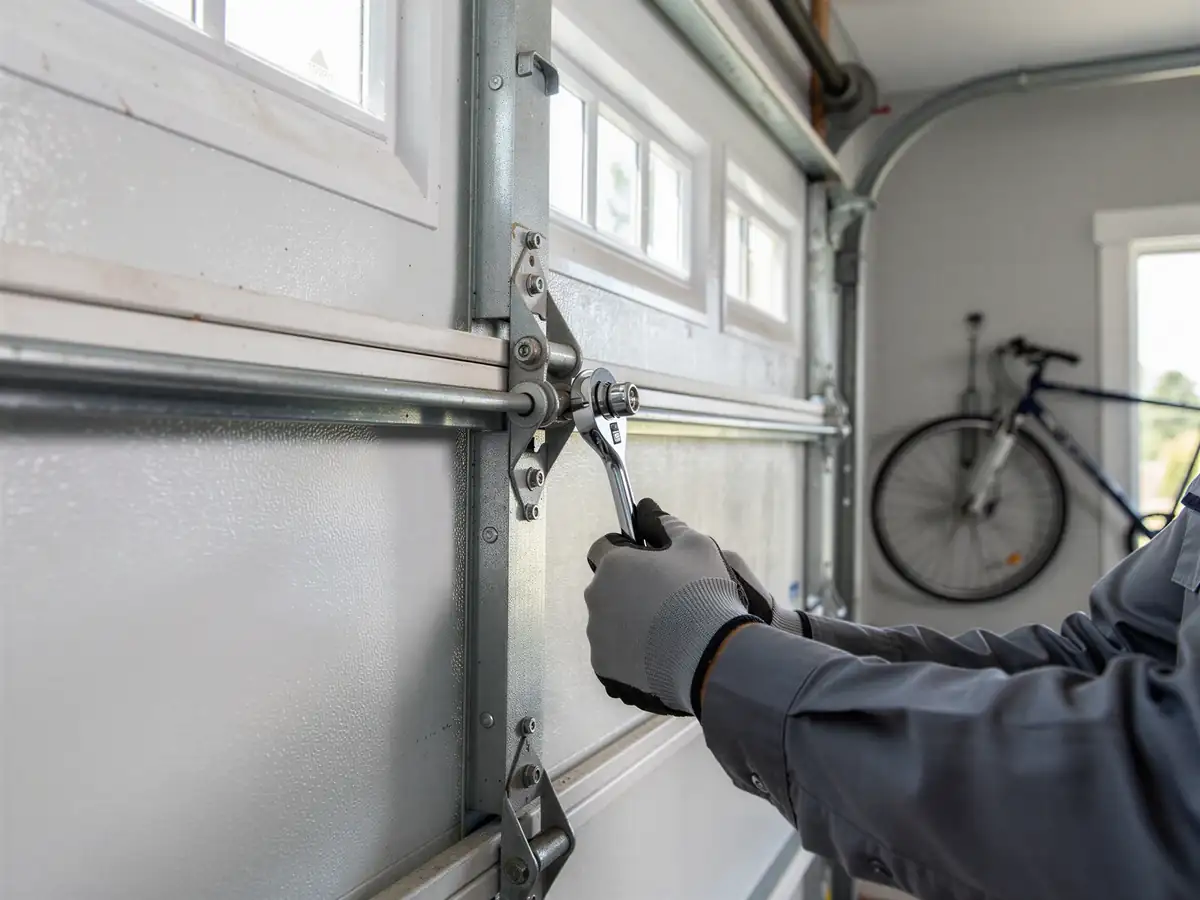
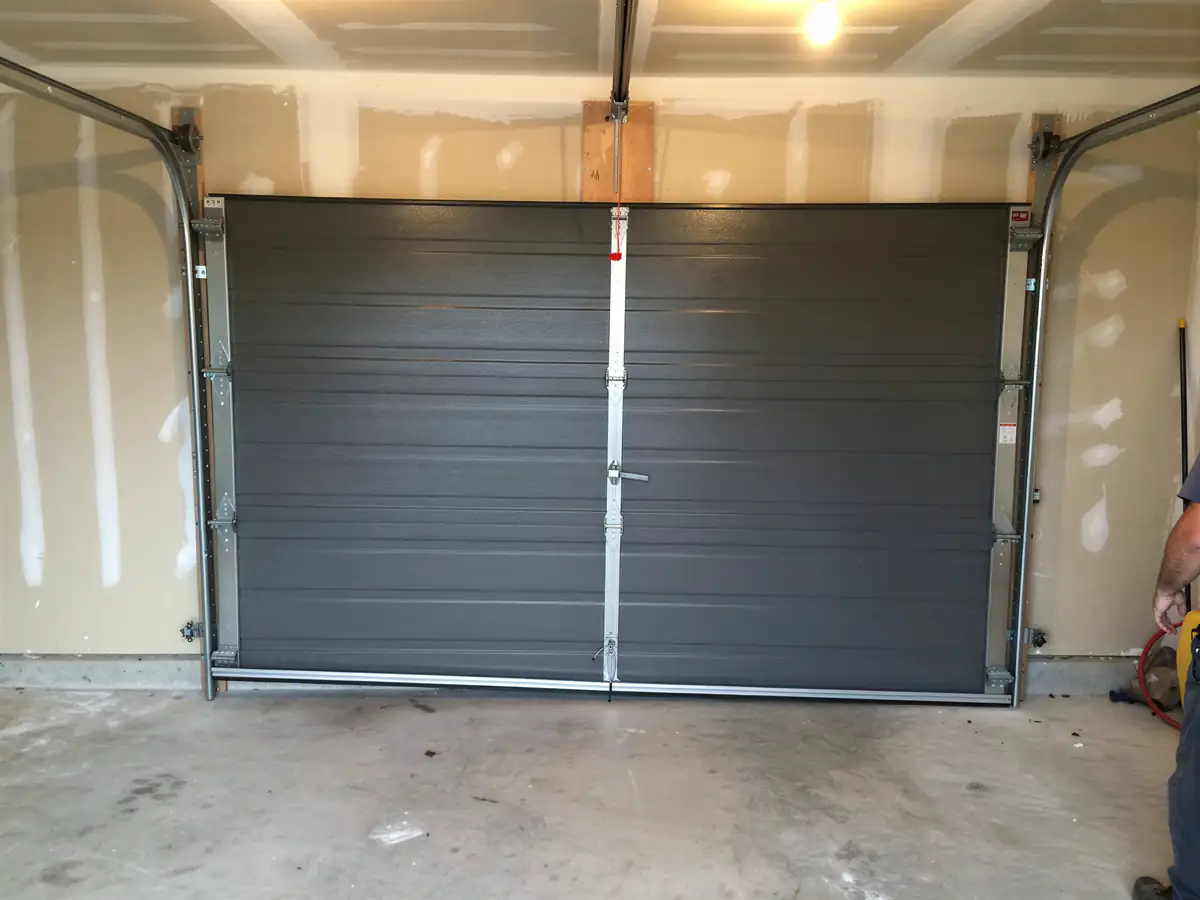
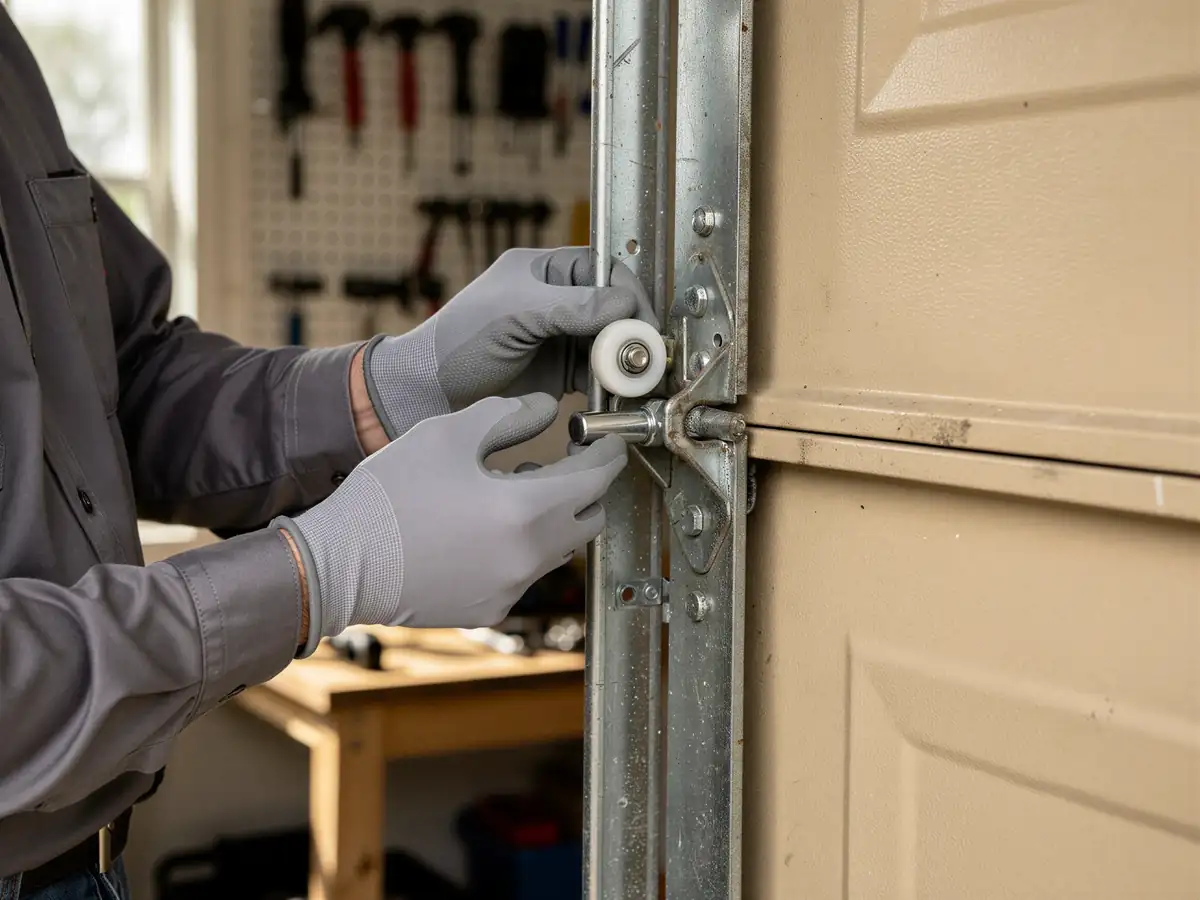
So we're working on the track and the door panels, not the opener. We pull the old rollers one at a time, check the stem and the roller bracket at each spot for wear or bending, and set new rollers with sealed bearings so moisture can't get into the race the way it did with the originals.
We also check the track alignment while we're in there
A worn roller often bends the track slightly where it's been dragging, and if we don't true that up, a brand new roller will wear unevenly within a year. On doors where the bottom bracket or hinge has stretched out from the old roller's flat spot, we replace that hardware too rather than bolt a new roller to a bent bracket.
One limitation worth saying plainly
If the track itself is rusted through or badly dented, roller replacement alone won't quiet the door down, and we'll tell you that instead of selling you parts that won't fix the actual noise. On a well-maintained door, the whole job runs under two hours.
How It Shows Up
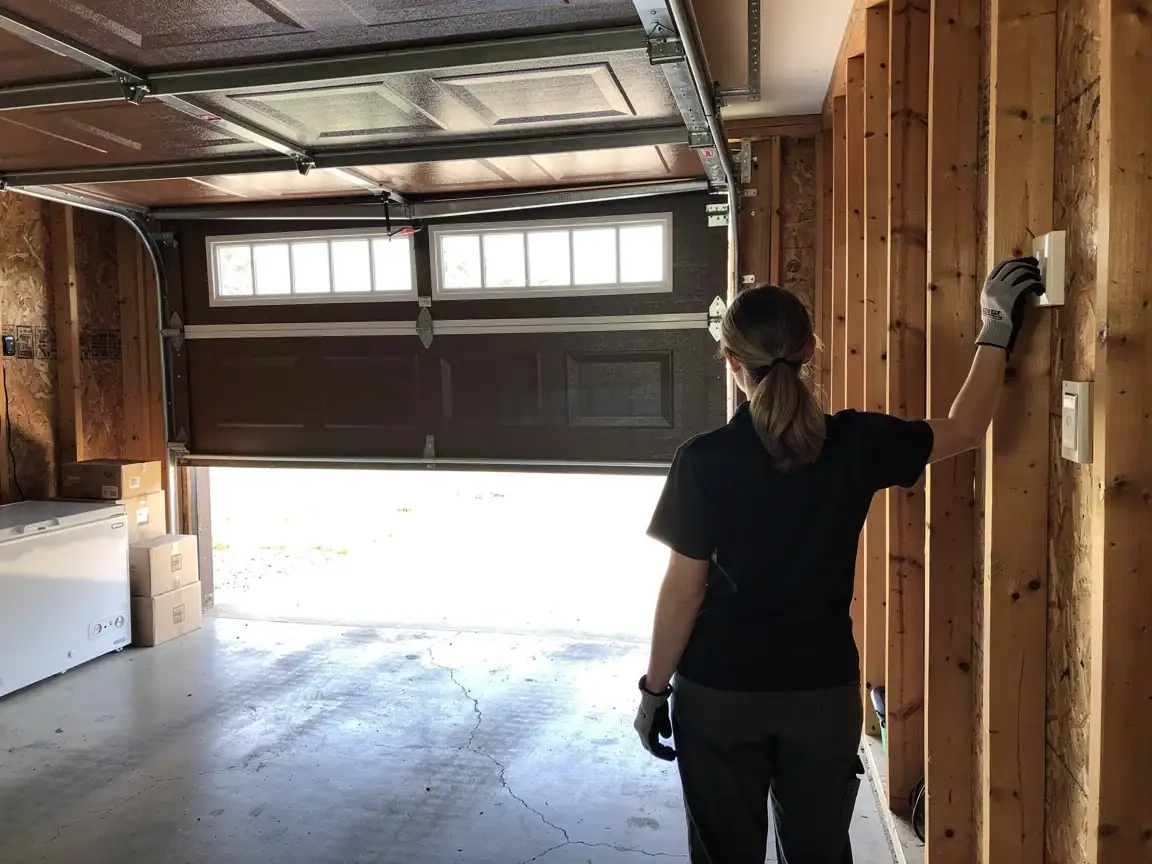
The usual first sign is a grinding or scraping sound right as the door starts to move, which is the flat spot on the roller hitting the track. As it gets worse, you'll feel the door hesitate or jerk at that same point every single time, not randomly. Some owners notice the door pulling slightly to one side as it travels, which usually means rollers on one side have worn faster than the other, often the side that gets more direct sun or more wind-driven moisture.
In homes with original 1980s-90s steel rollers, the wear is usually symmetrical and gradual, a slow build of noise over a year or two. In homes where a nylon roller upgrade was done at some point and only partly finished, you'll sometimes get a mismatch between smooth nylon-rolling sections and rough steel-rolling sections, which feels like the door is fighting itself. Either way, rollers rarely fail all at once. They tell you first.
Stocked Parts
We carry sealed-bearing nylon rollers in the stem lengths that match the steel track and bracket spacing common to the 1964-2007 housing stock across this service area, so most roller jobs don't wait on an order. We also keep replacement stems and bottom brackets on the truck, since those are the parts that usually need swapping alongside a worn roller rather than on their own.
What we don't stock on the truck is specialty hardware for uncommon or custom door brands, and if your door needs something outside standard sizing, that part may need to be ordered, which adds a few days. We'll tell you up front if that's the case rather than let you assume it's a same-visit fix.