What Causes It Around Here
A torsion spring is rated for a number of open-close cycles, not a number of years, and most of the housing stock in this service area was built between 1964 and 2007, with the heaviest concentration going up in the 1980s and 90s across the ten communities we cover. That means a lot of original springs are now 25 to 40 years into a part that was never meant to outlast the house it came with.
The climate here doesn't help. This area sits in a cold-moderate band, which means the garage sees real freeze-thaw swings every winter rather than one hard freeze and done. Steel fatigues faster under that kind of repeated temperature cycling, especially on a spring that's already near the end of its rated life. A spring that might have another five years left in a milder, steadier climate can snap here instead.
We also see a fair number of springs that were replaced once already with the wrong wire gauge for the door weight. That's common on homes from this era where the door itself may have been swapped for a heavier insulated model without anyone upgrading the spring to match. The spring holds for a while, then goes.
What the Fix Involves
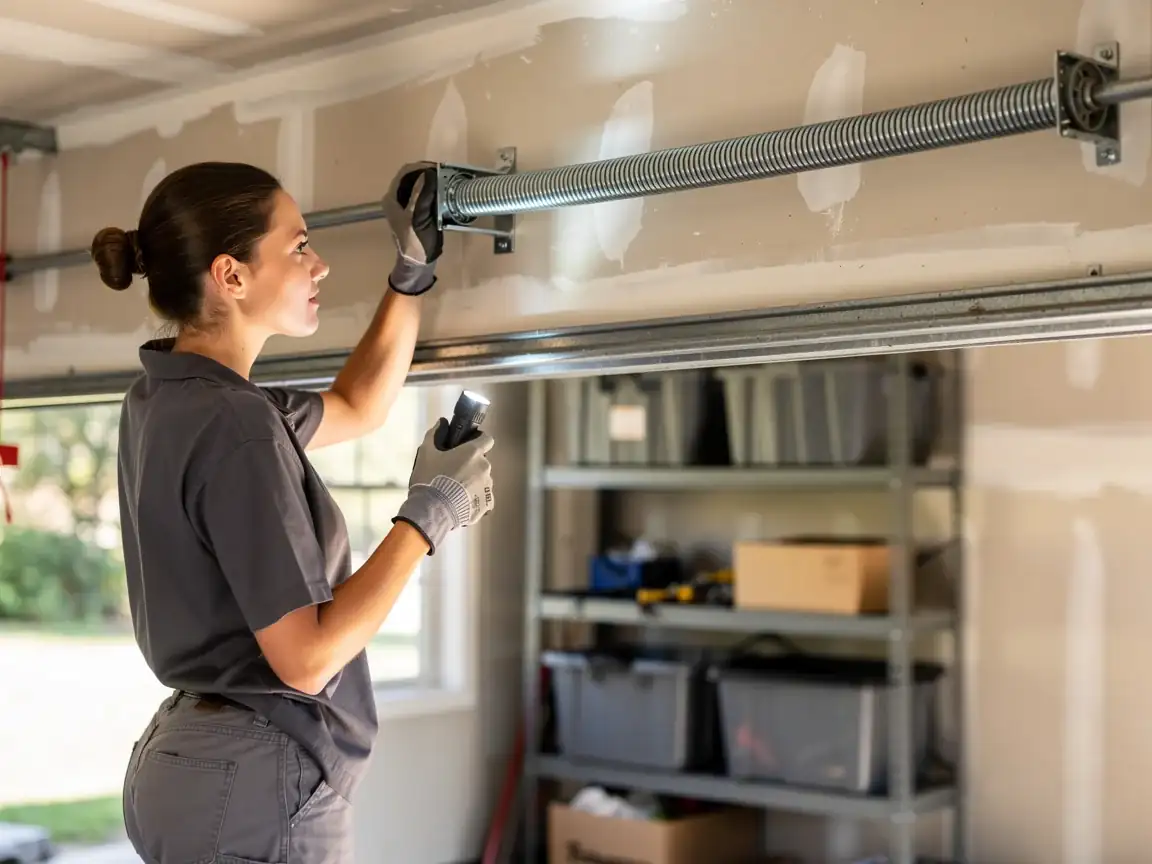
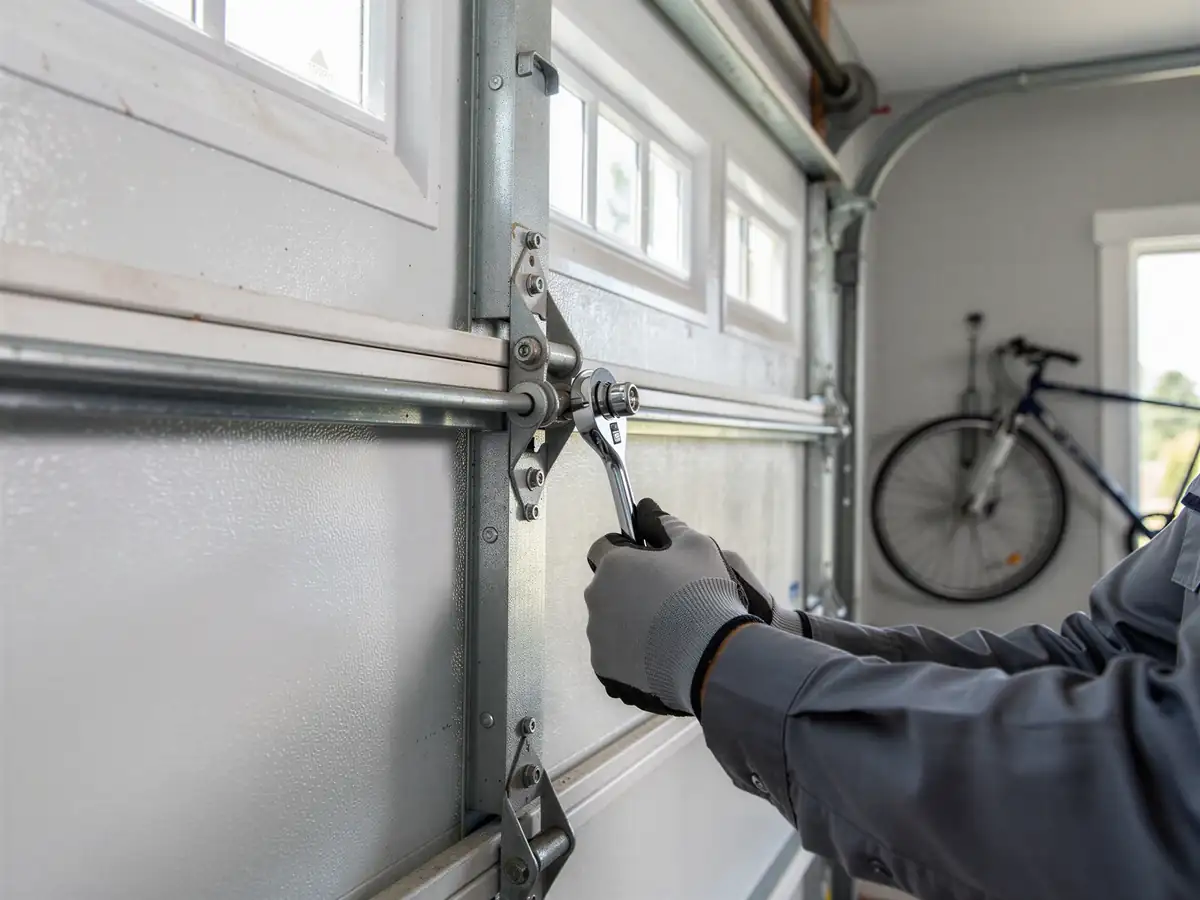
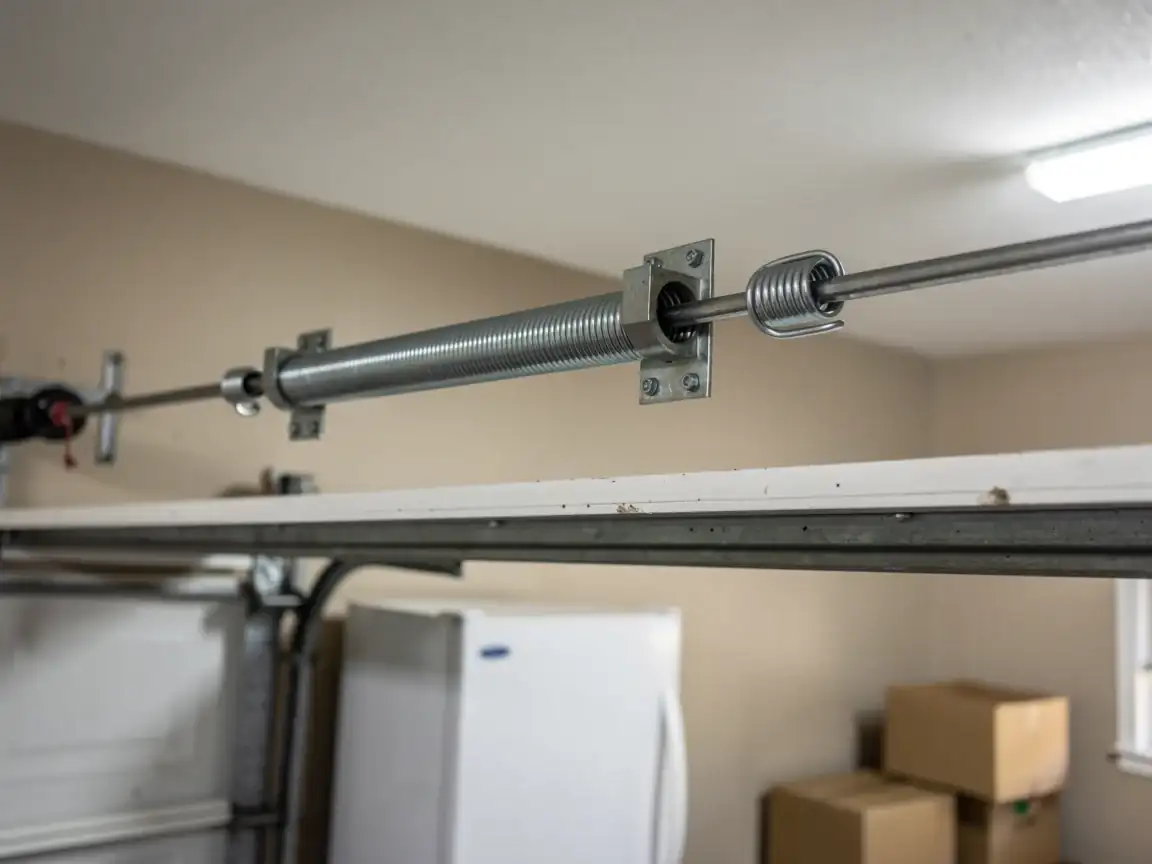
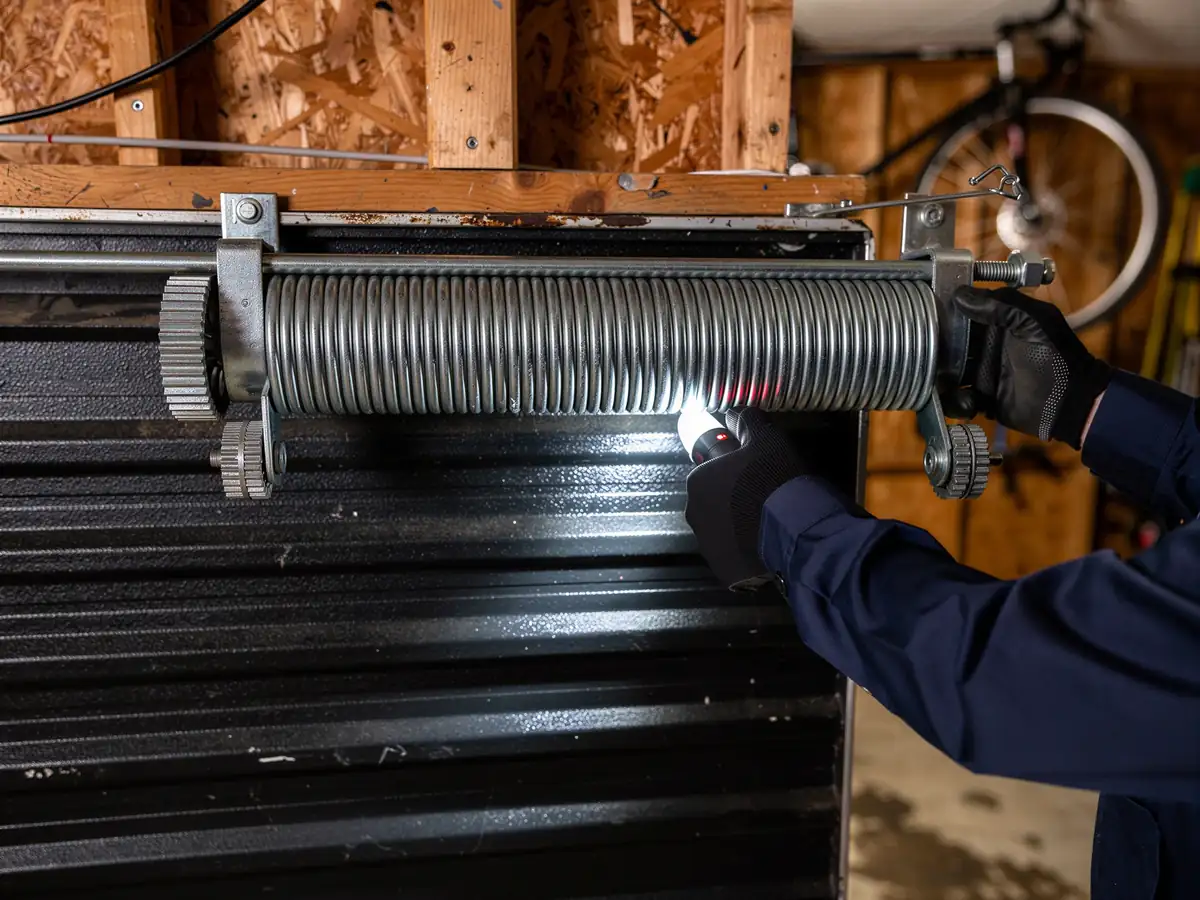
We measure the door's wire size, coil diameter, and wind length off the broken spring or the drum if the spring is gone entirely
Rather than guessing off the door's age or brand. On a double door, we replace both springs even if only one broke, since the second one is operating on the same cycle count and the same winter stress and tends to go within weeks of its twin.
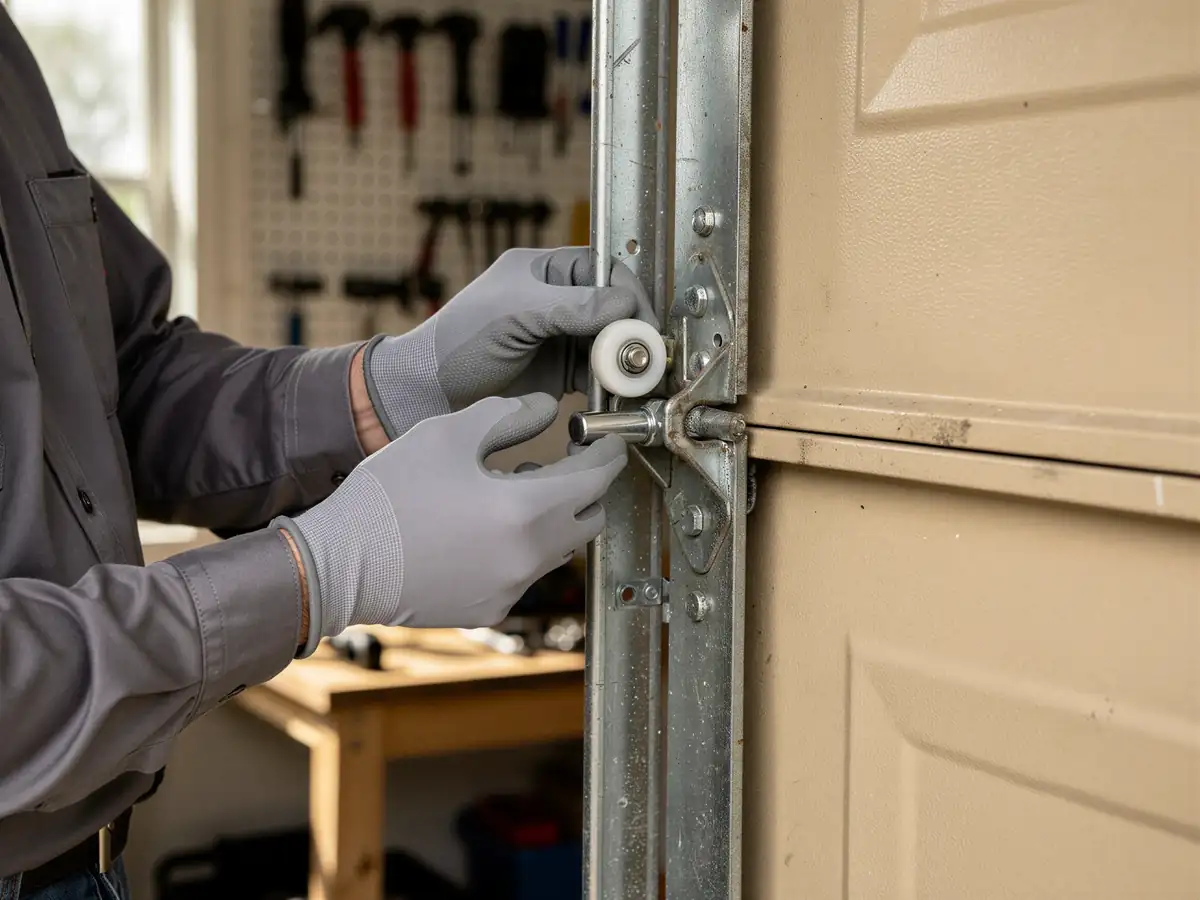
We check the cable drums and the center bearing plate while the door is open
Because a spring failure sometimes pulls a cable off track on the way down or scores a drum that then needs replacing too. Skipping that check is how a spring job turns into a second service call a month later.
Once the new spring is on, we set the tension by counting turns for the measured wire and drum size
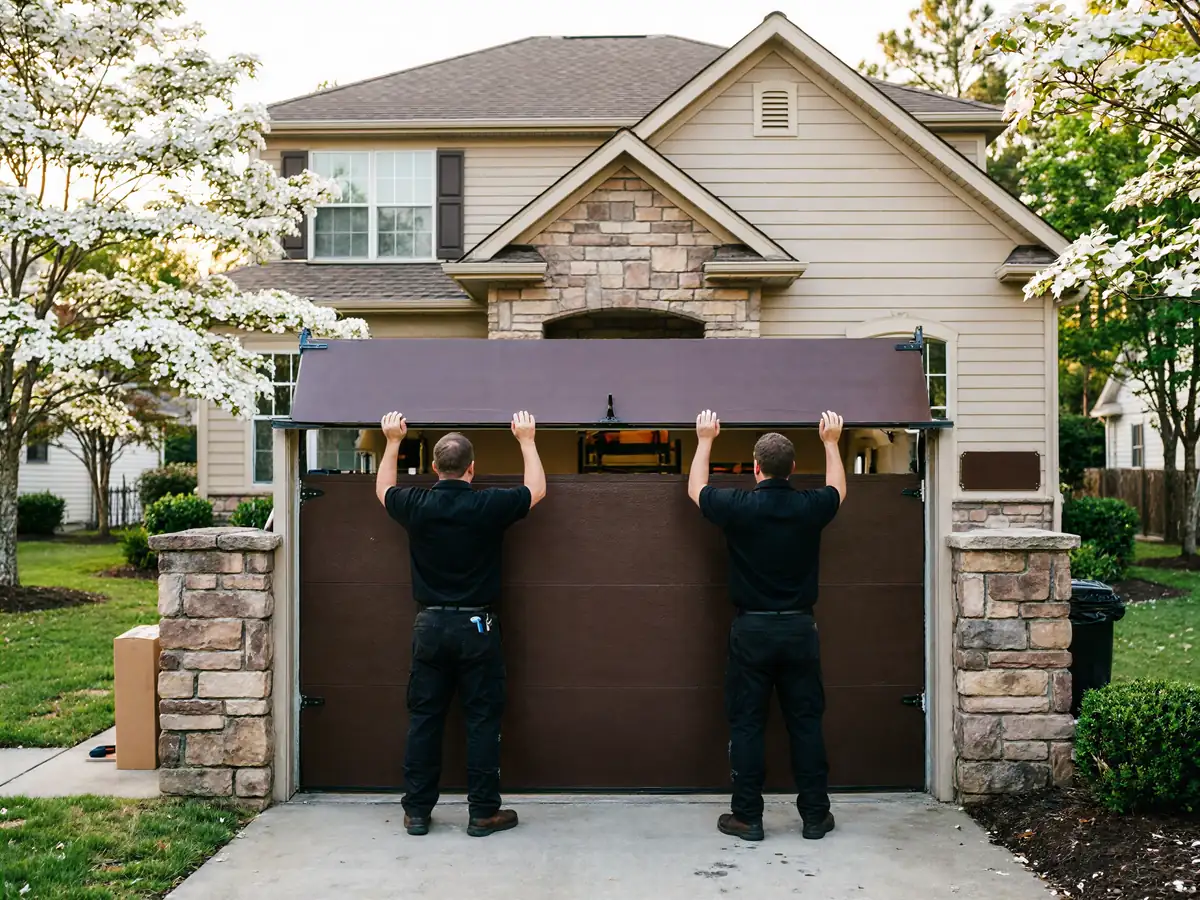
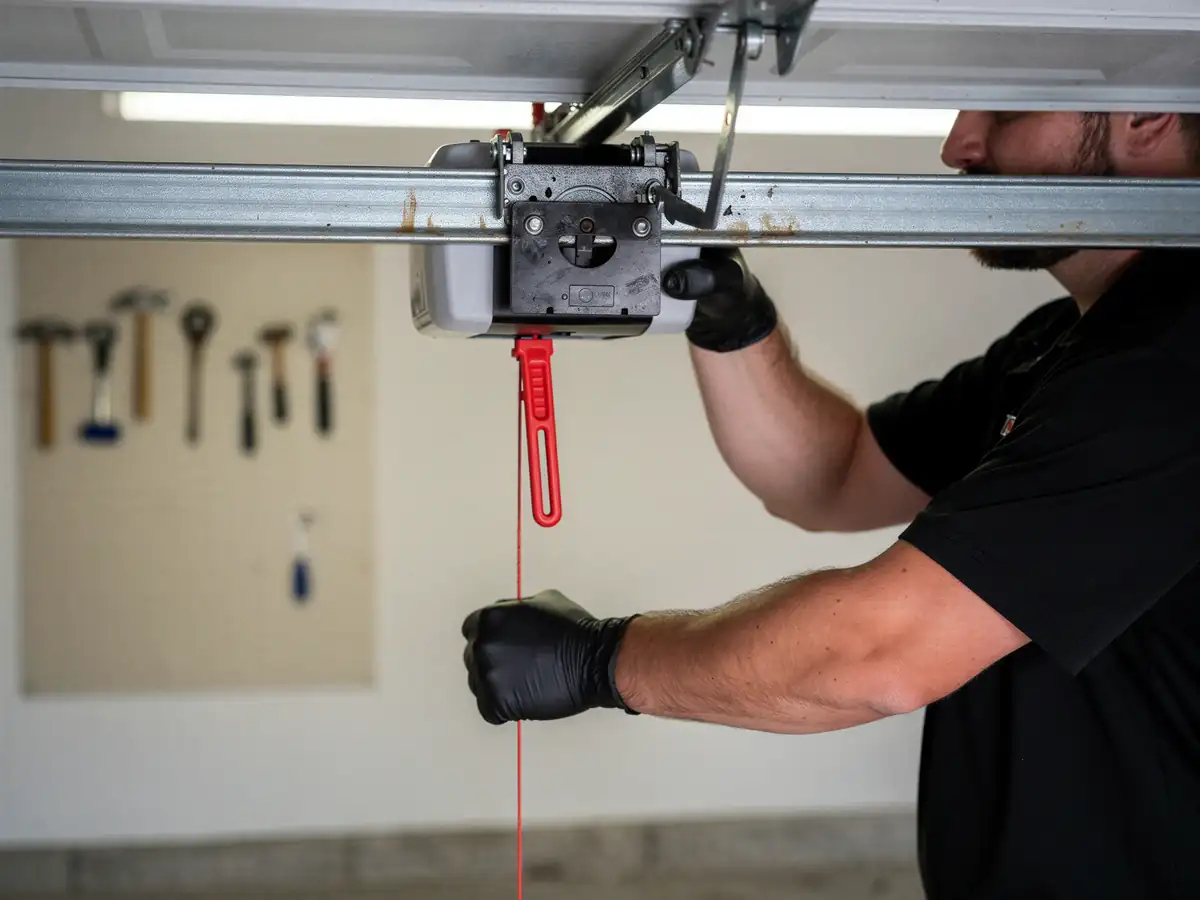
Then run the door through its full travel and check balance by hand with the opener disconnected. A door that's balanced right should hold at roughly waist height on its own. If it doesn't, the spring needs another quarter turn, not an opener adjustment to compensate.
How It Shows Up
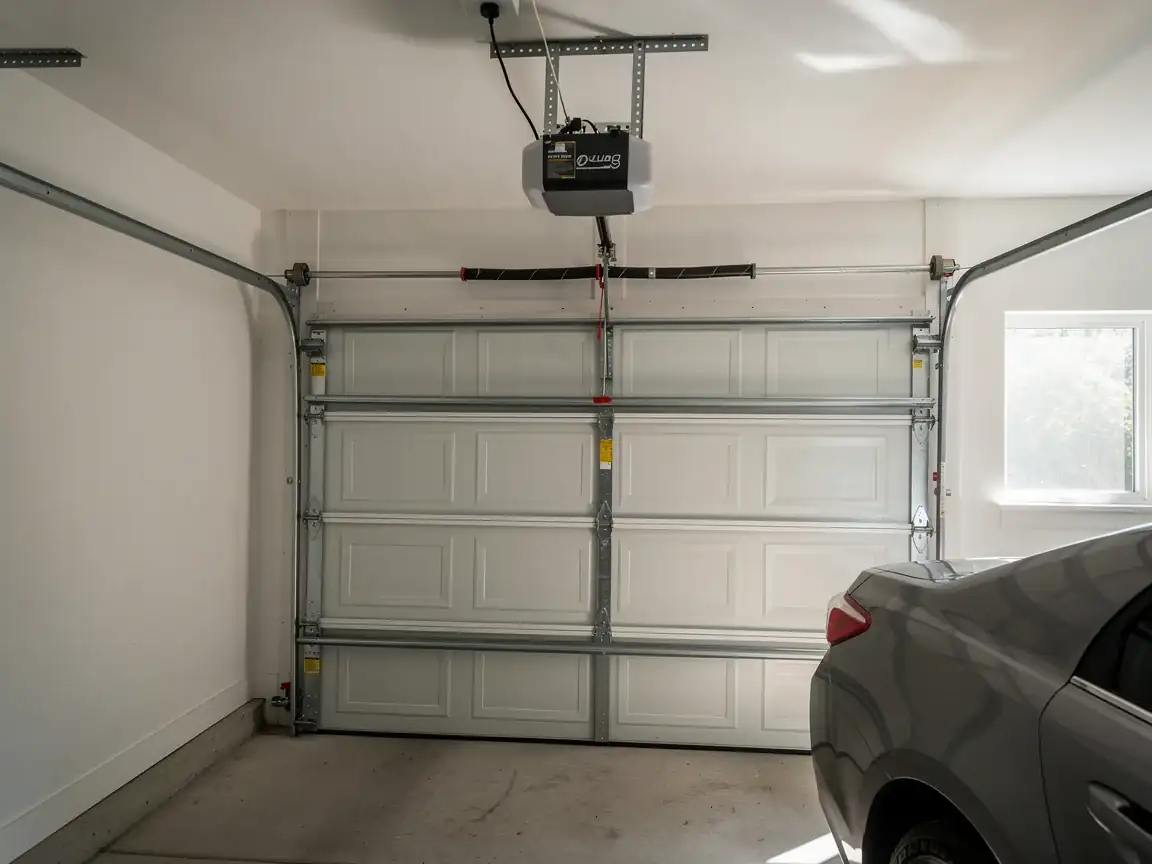
Most people find out they have a broken spring the same way: the opener runs but the door barely moves, or it moves an inch and the opener strains and stops. If you try to lift the door by hand at that point, it feels like dead weight - twenty-plus pounds heavier than it should, because the spring that was supposed to carry most of that load is gone.
Some owners hear it happen. A torsion spring under tension lets go with a loud bang, often mistaken for something falling in the garage or a car backfiring outside. If you heard a bang recently and the door's been acting off since, that's almost certainly it.
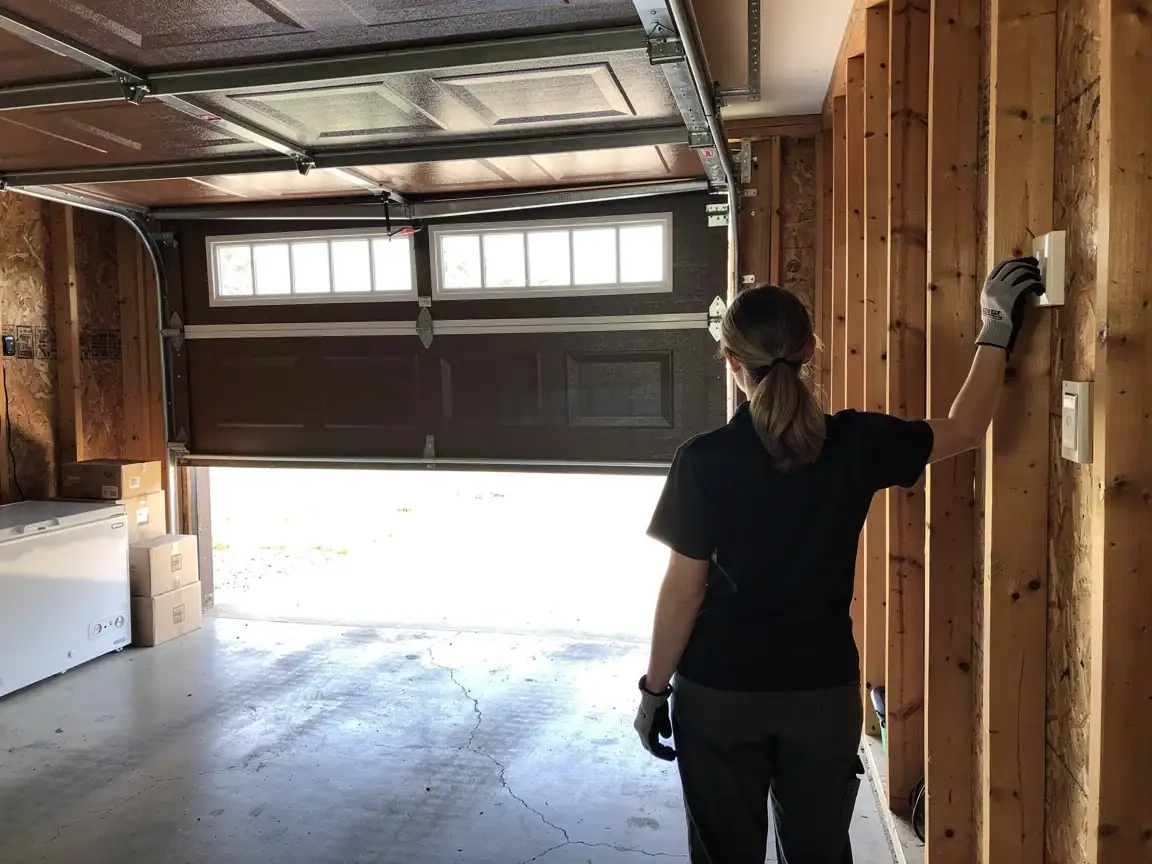
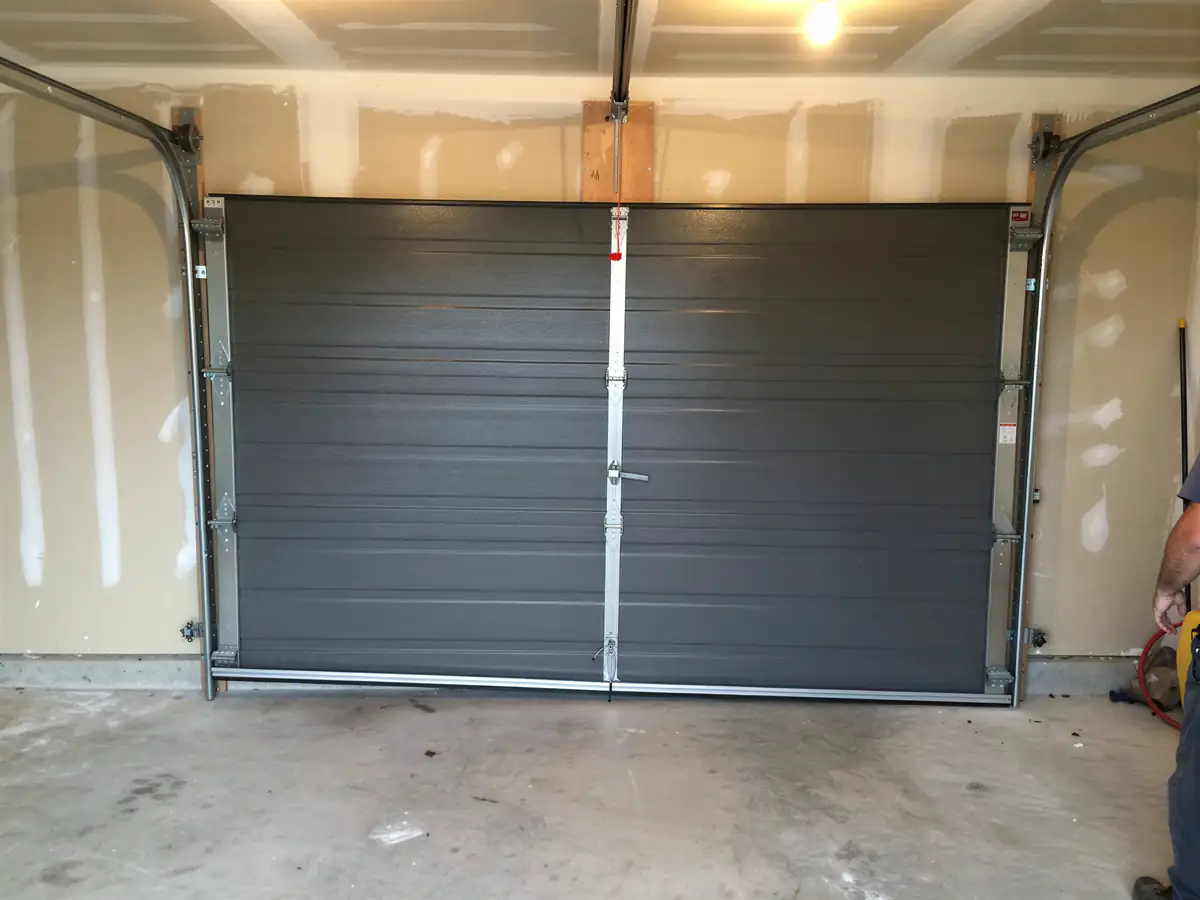
A slower warning sign is a door that's started drifting shut on its own, or one side that looks visibly lower than the other when it's sitting open. That's a spring losing tension gradually rather than snapping outright, and it's worth a call before it breaks all the way and takes a cable or drum with it.
Stocked Parts
We carry common torsion spring sizes for the standard 7-foot and 8-foot residential doors that make up most of the stock in this service area, along with matching cables and drums, so a straightforward spring repair is usually a same-visit job.
Where we run into lead time is on oversized or custom doors - anything outside the standard sizing, or a spring wound for an unusually heavy insulated or carriage-style door. Those springs sometimes have to be special-ordered, and we'll tell you up front if that's the case rather than promising a same-day fix we can't back up.
With roughly 15,372 owner-occupied houses across the 35,811 households in this area, and a median household income here of $90,626, we see enough spring jobs on standard doors that keeping that inventory on the truck makes sense. It's the oddball doors, not the common ones, where you should expect to wait a day or two for the right part.